American Eagle
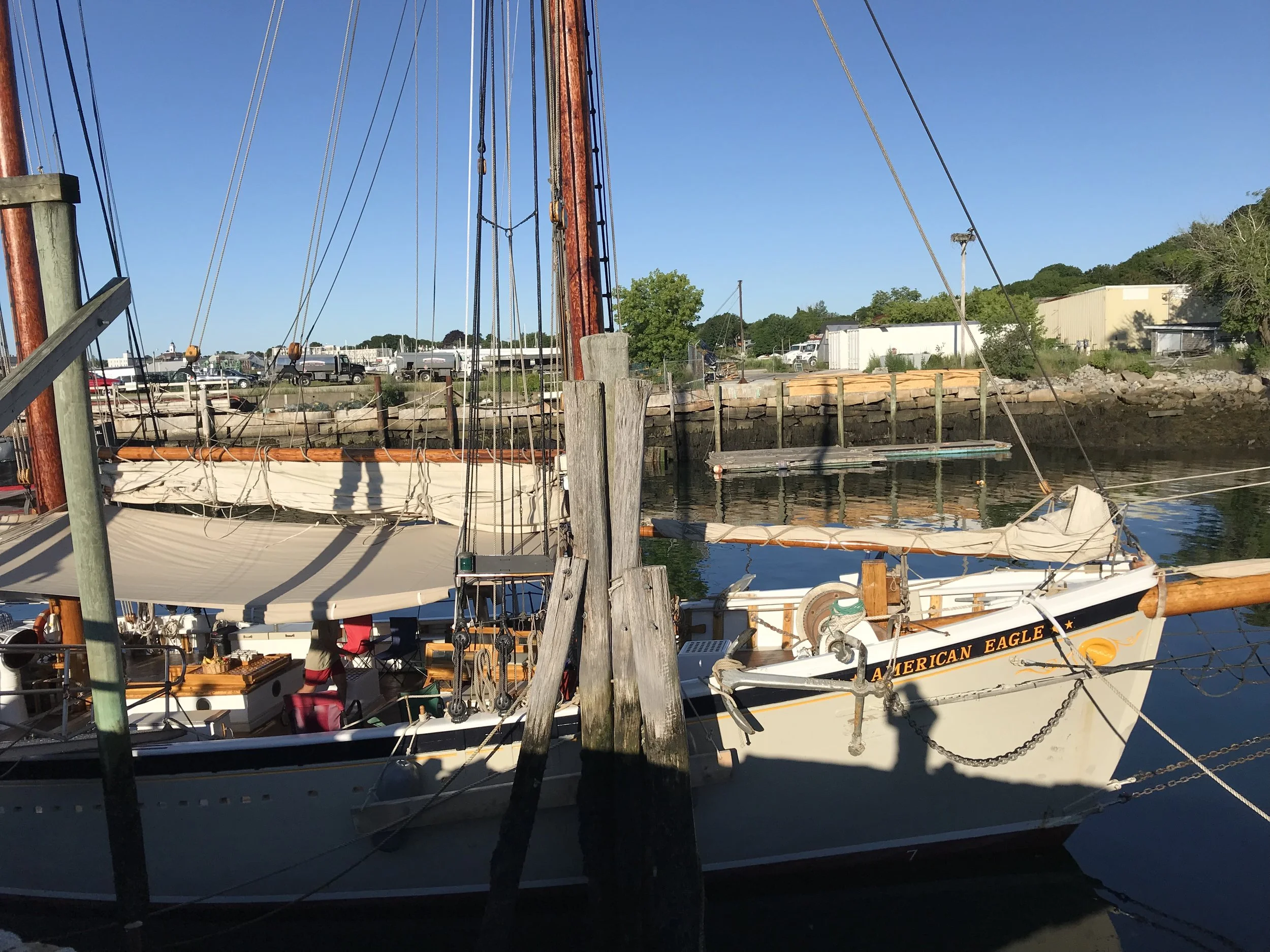
American Eagle
I ran into Captain Foss for the second time this summer on my way out to Pond for the 4th of July. I stopped as he and the crew were swabbing the decks, and he asked me if I had quit my job yet. I told him I had, and he mentioned he always needs crew, likely out of concern for my future. I immediately expressed interest, and when I got back from the camping trip, I emailed the address on his website, and heard back from Shary within a few hours that Captain Foss could use me on the next trip.
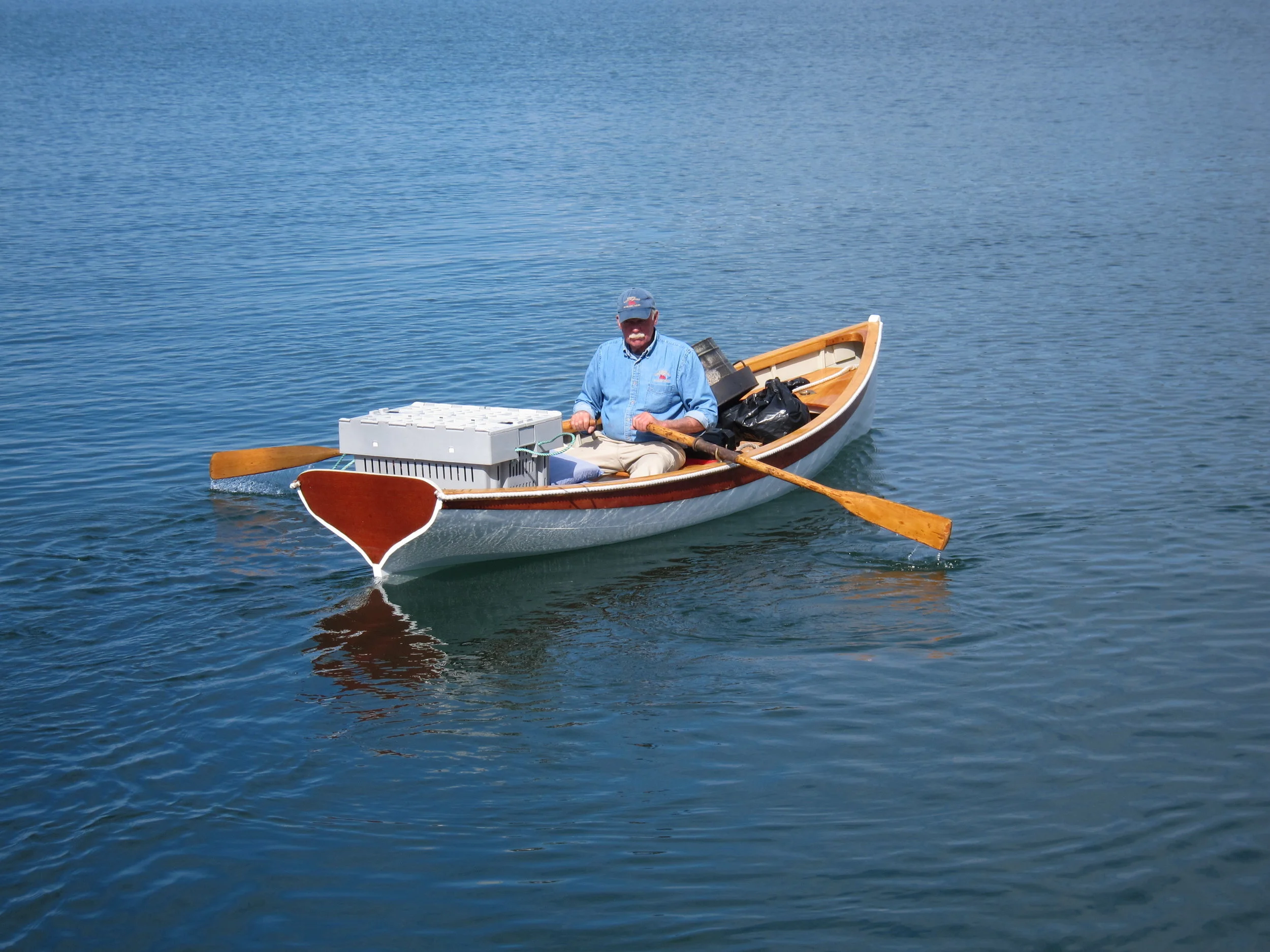
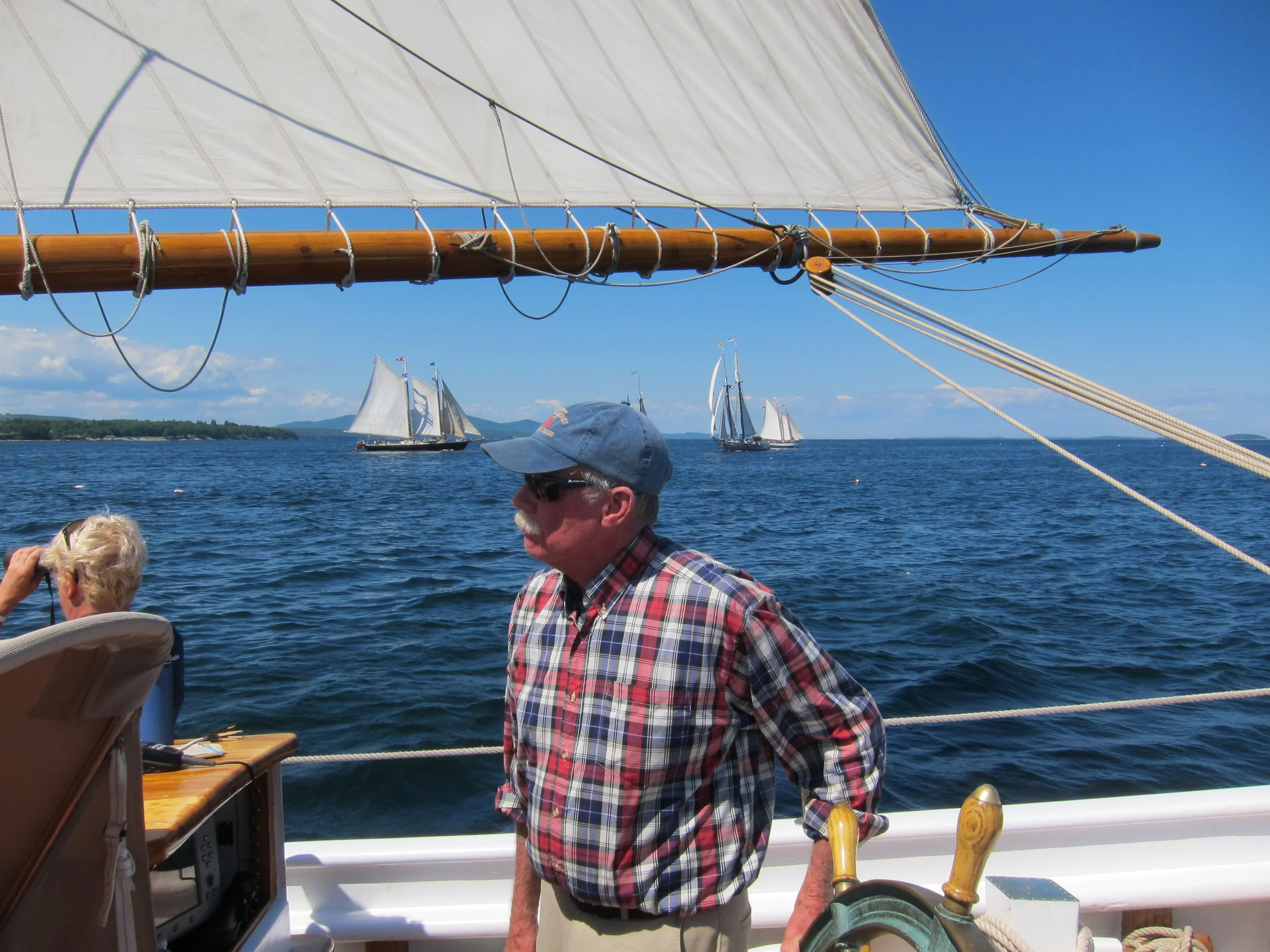
I was very excited to go. I had ‘worked’ on a schooner as a teenager for a week. In fact, I was on the Lewis R. French, which was Captain Foss’s boat before the American Eagle. He had sold the boat to his former first mate, Captain Dan Pease who was also friends with my grandfather. Dan needed a Mess Mate at last minute for a week and I was available. It was not an easy job. It was early mornings and long days, mainly below decks, prepping and chopping for meals, stoking the wood-burning cooking stove and oven, and doing the dishes. If there is one skill I took away from that job, it was washing dishes. I am an expert dish washer, and can do it with minimal soap and water waste, which is critical on a boat, but nowhere else. This job was going to be above decks, helping sail the boat and I couldn’t wait. The reality is it was not really a job. Captain Foss had said I could help as much or as little as I wanted, and that I should feel free to ponder what my next step would be. Little did he know I wanted to see and learn as much as possible about running the Eagle, since I was thinking THAT could be my potential next step, and it might.
I was taught to love these windjammers by my grandfather. His father had run one, the Emilie Belle, and his uncle Irv ran the Lewis R French until he started seeing another woman and skipped town, never to be seen in Brooksville again! They are in my blood. When I started this blog, even before I knew I would go on the Eagle, I included a picture of the Mary Day (another windjammer) as the homepage for the site. And to this day, when someone asks me to draw something, I draw a windjammer because it was the first thing I learned to draw, and really the only thing. I’m not much of an artist.
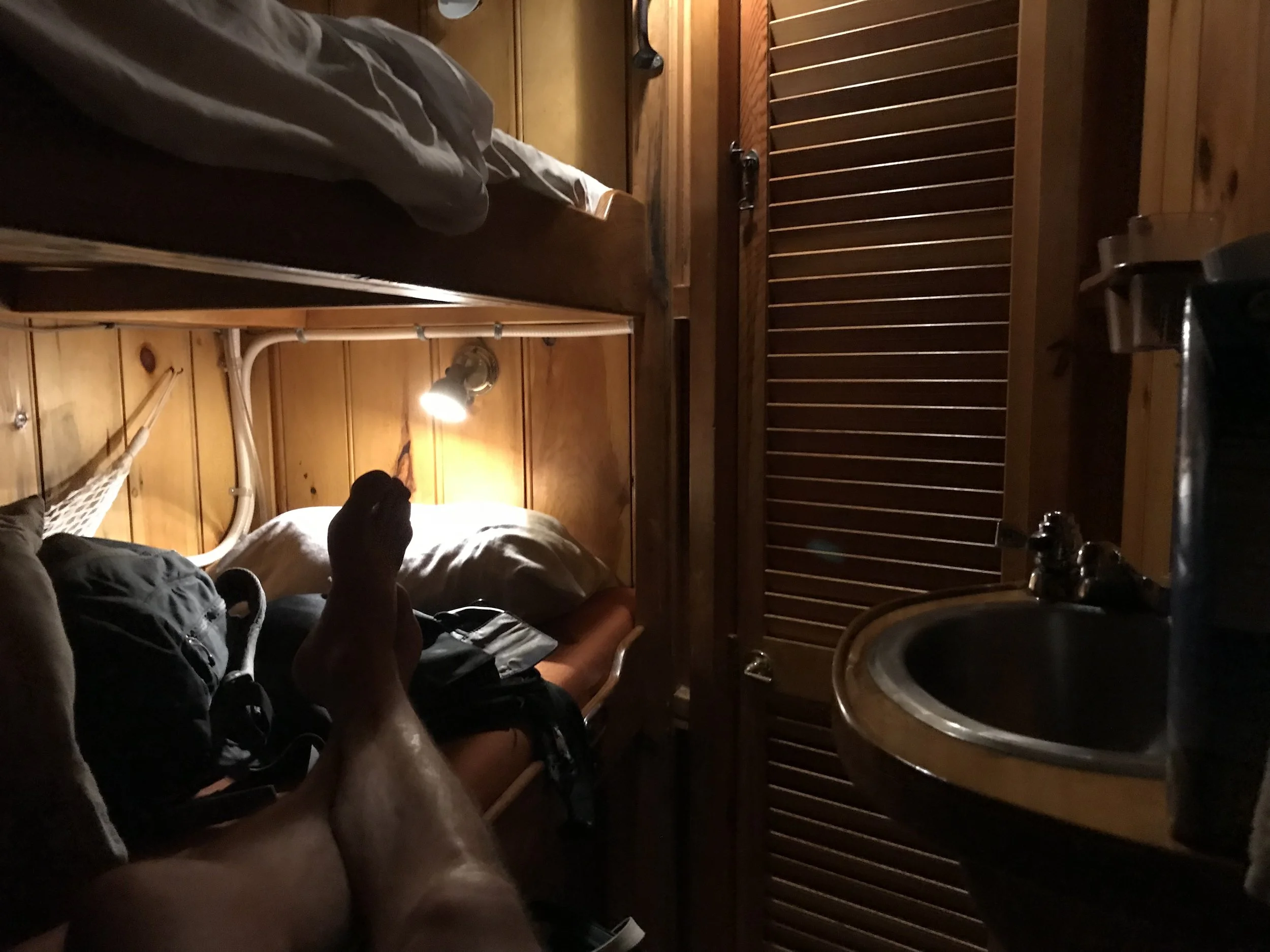
I love being on schooners. They feel like home. I like small spaces, a bunk and a sink. That is truly all I need. I also like the rhythm and consistency of the boat. There is a focus on planning on a boat, provisioning for the trip, packing gear and supplies in the most efficient way possible. There is a place for everything and a process for everything. There needs to be on a boat. When I think about the way I was raised, and what is comfortable to me, it is planning and process, and a lot of that comes from my grandfather. There was always a right way to do things, and if you didn’t do it that way, there would be consequences. That is truer on a boat than anywhere else. If you don’t coil the right way, flake the anchor chain the right way, raise the sails in the right order, there are issues that come up, many of which are learned by experience. But there is a present moment aspect on boats as well. Particularly sailboats where you are at the mercy of the wind in terms of where you can go when, and how fast. It really is a good mix of how I was raised, and what I was learning living on the West Coast and how the flexibility and open-mindedness about the world and how things ‘should’ be can also follow a process and have clear planning.
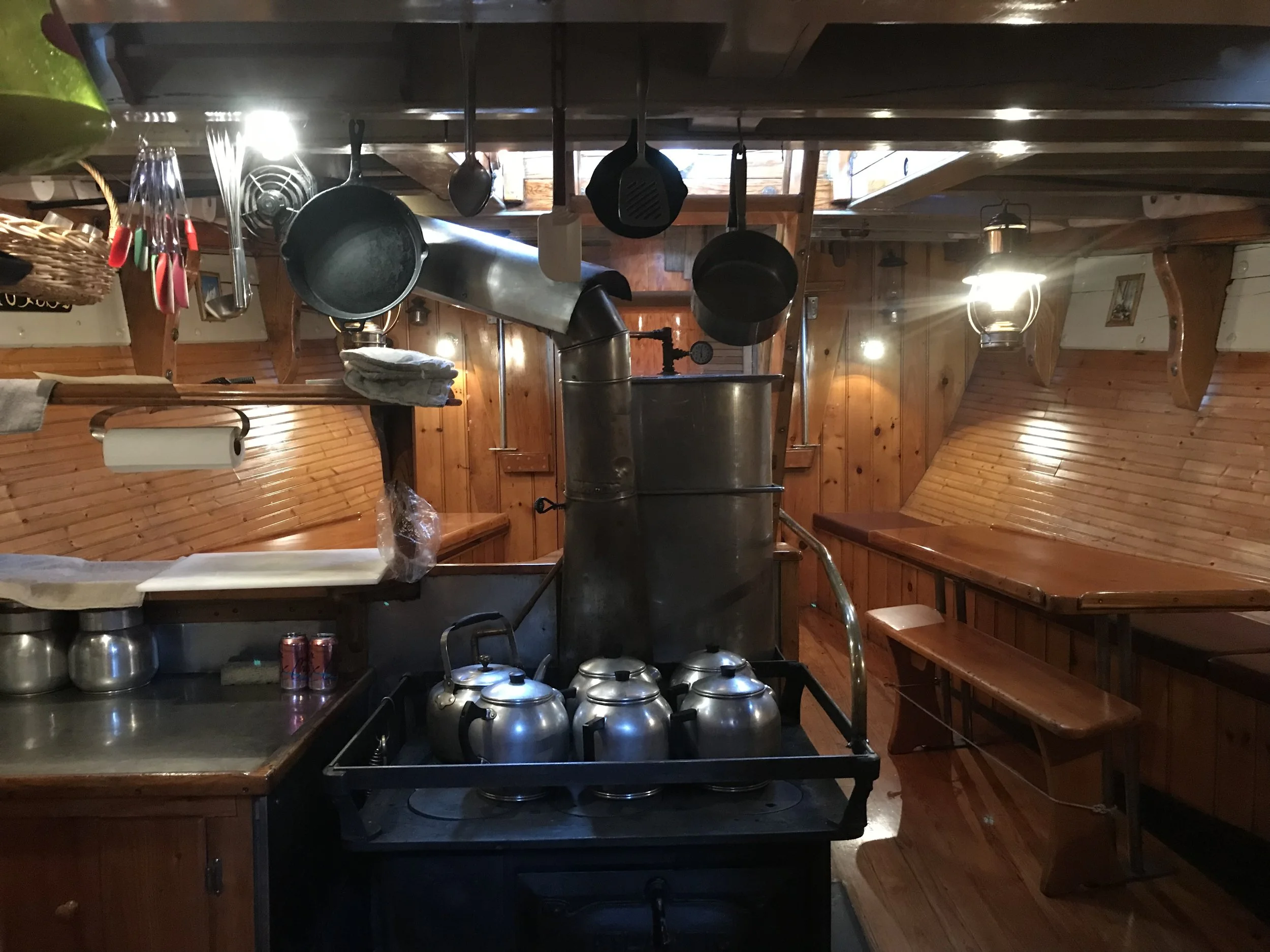
To be honest, it was fun to just be on the boat seeing the routine, and thinking about the reasons why things need to be done the way they are. No one better to learn this from than Capatin Foss, and he had trained his crew well. I realized as I watched the process over and over, and the meticulous care he took of the boat and his equipment why he and my grandfather got along so well. And I realized why I am so comfortable on these boats. That is how I was raised, and people not on boats don’t understand why people on boats need to do things in a certain way. The how and the why become very clear when something is not done right and something goes wrong. It invariably will, the question is how bad is the impact. My grandfathers brother Carlton was killed on the Emilie Belle after his jacket caught in the anchor winch.
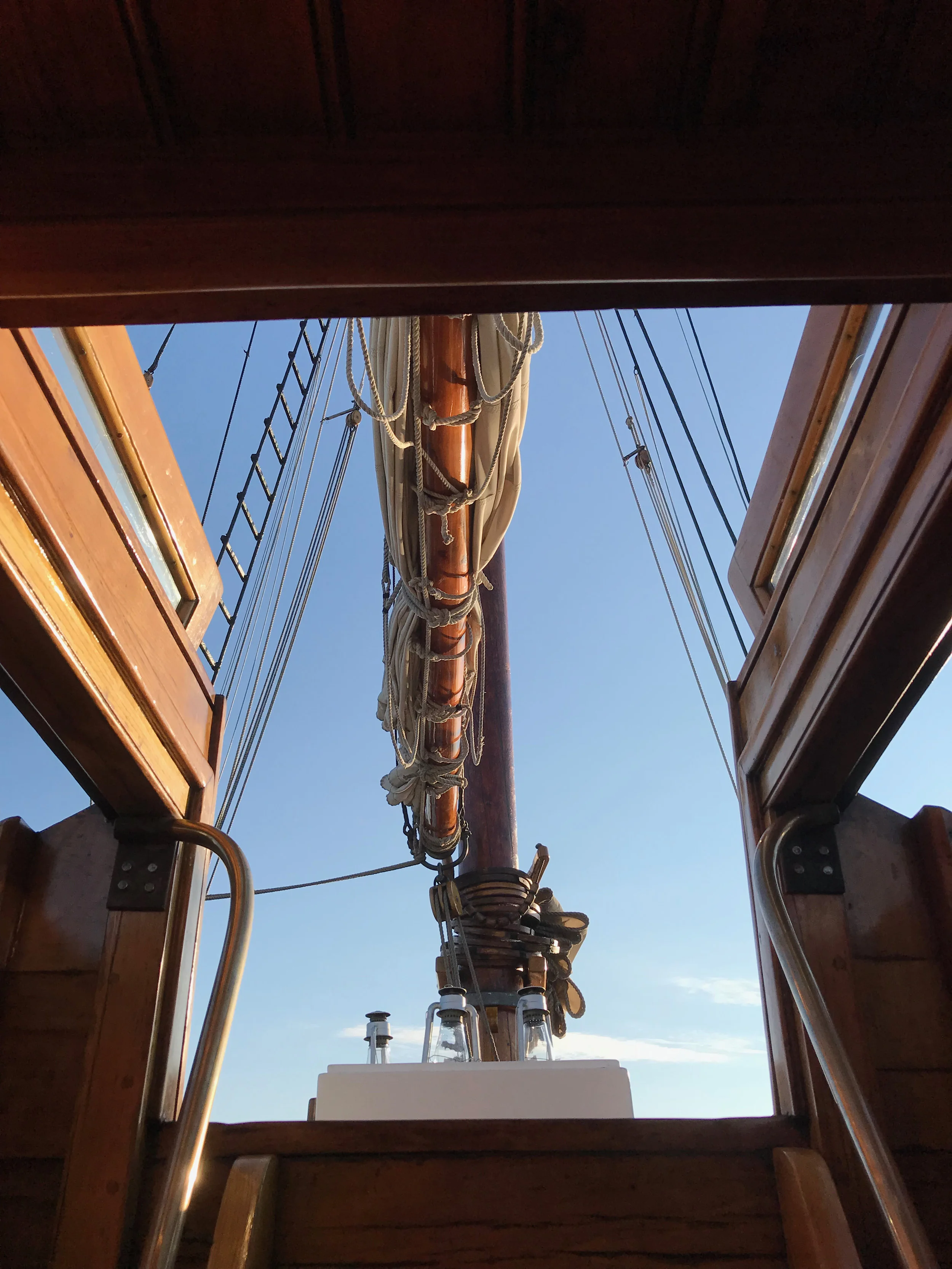
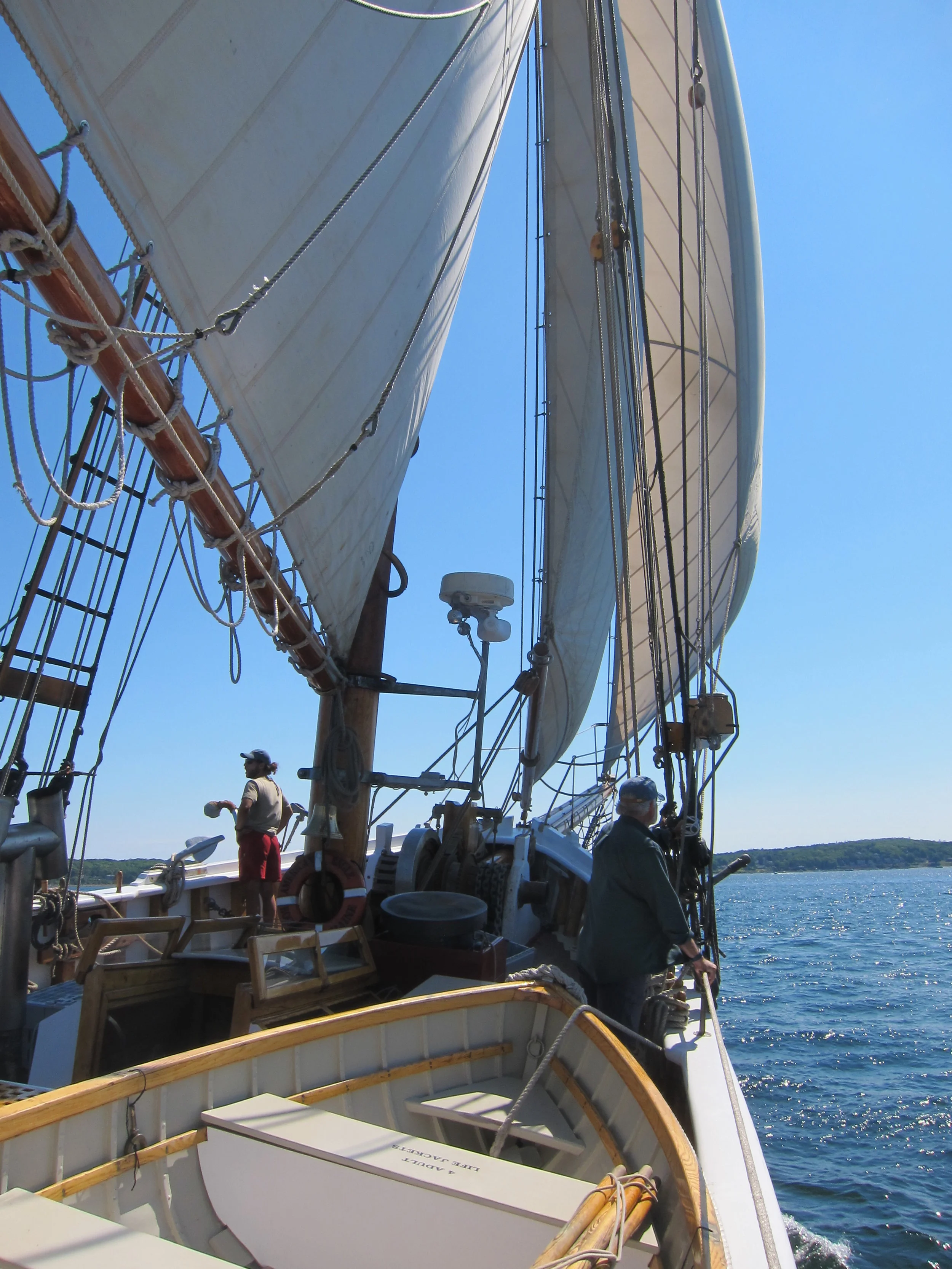
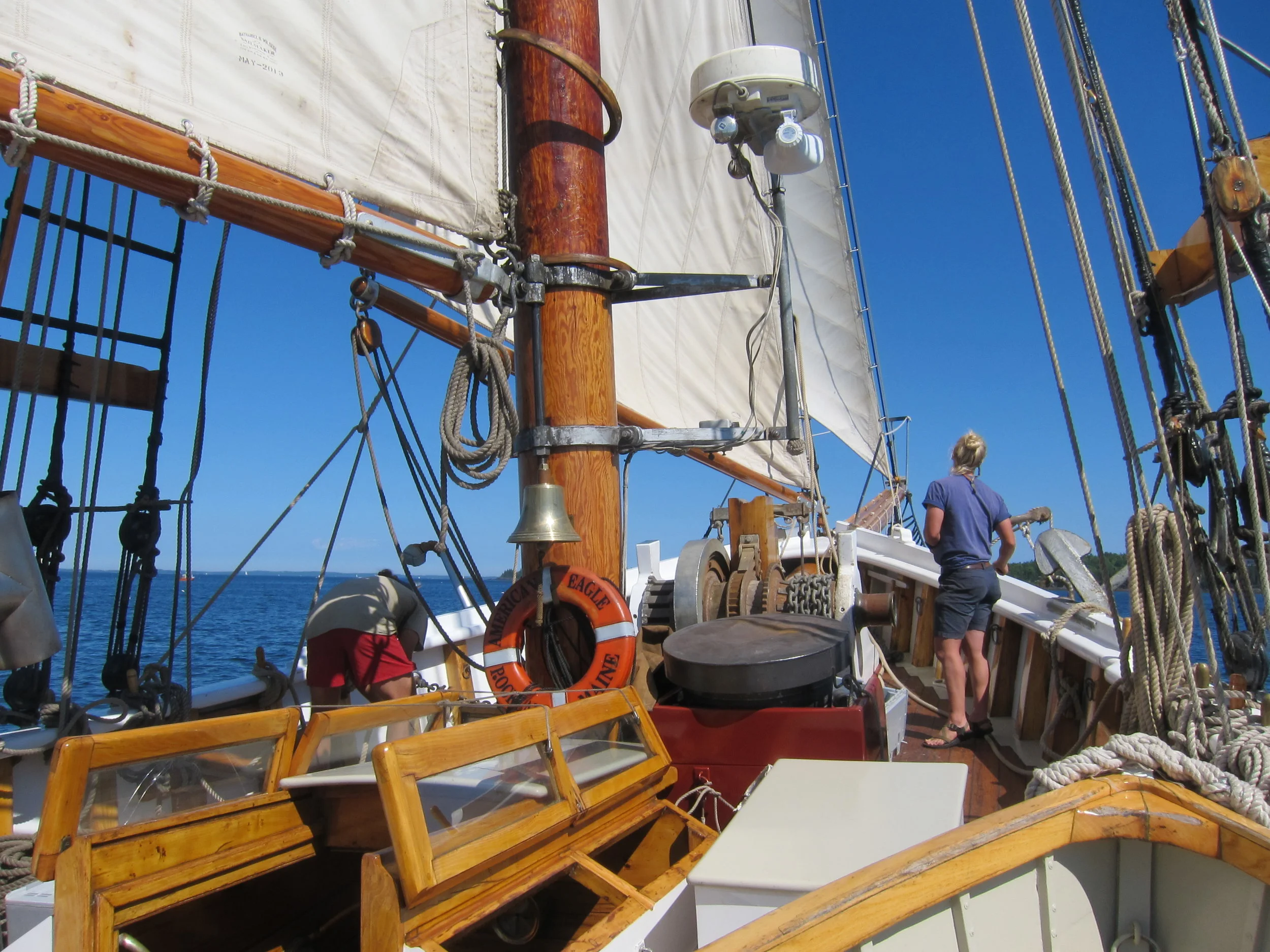
I particularly love being on the American Eagle because it is ‘old school’. Just like Captain Foss. For years he ran the oldest schooner in the fleet, and the oldest continuously working commercial vessel in the United States, and then he rebuilt the Eagle. He put his heart and soul into the rebuilding of that boat, and all of his knowledge and skill are represented in what he created and launched in 1986.
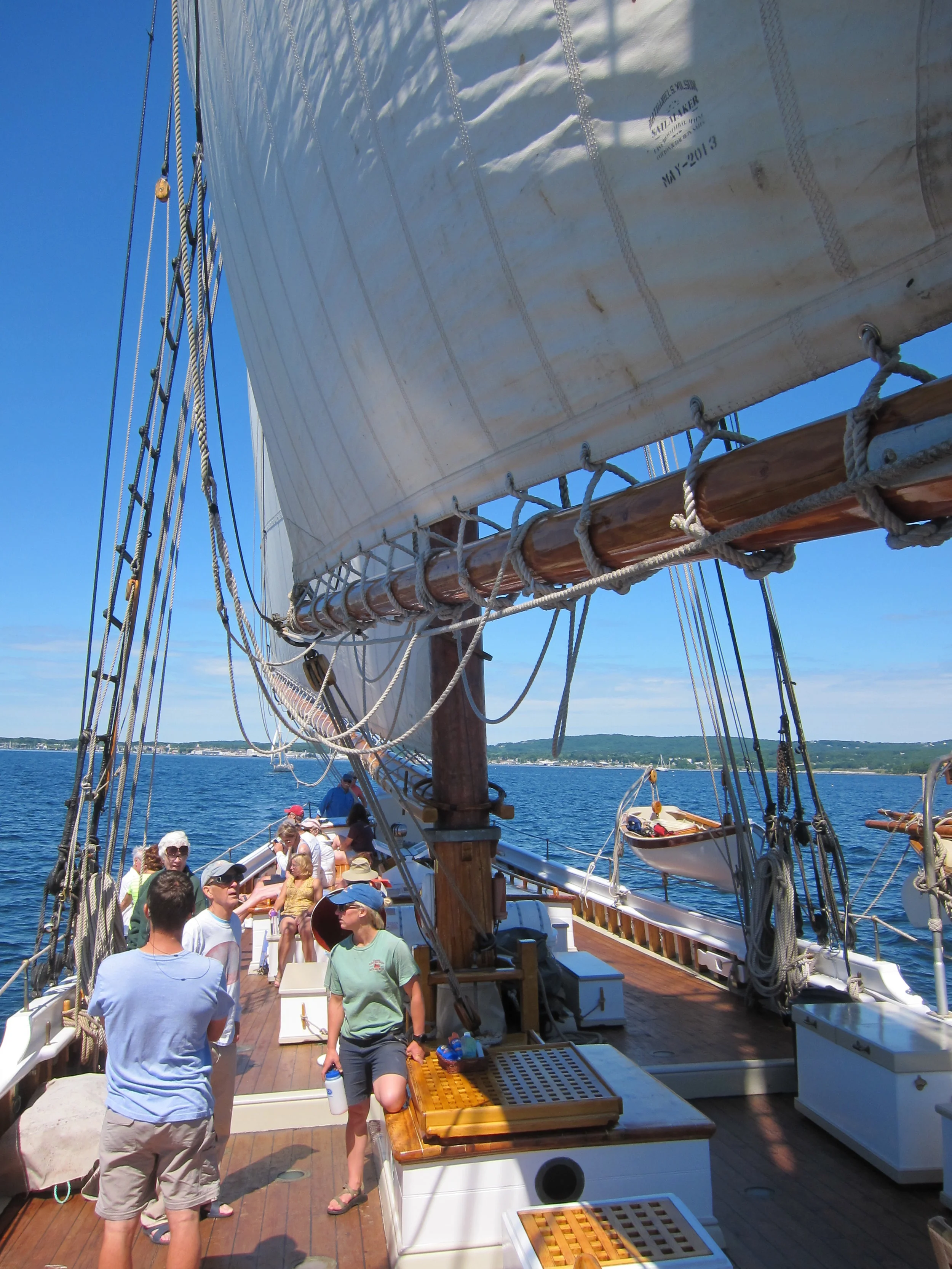
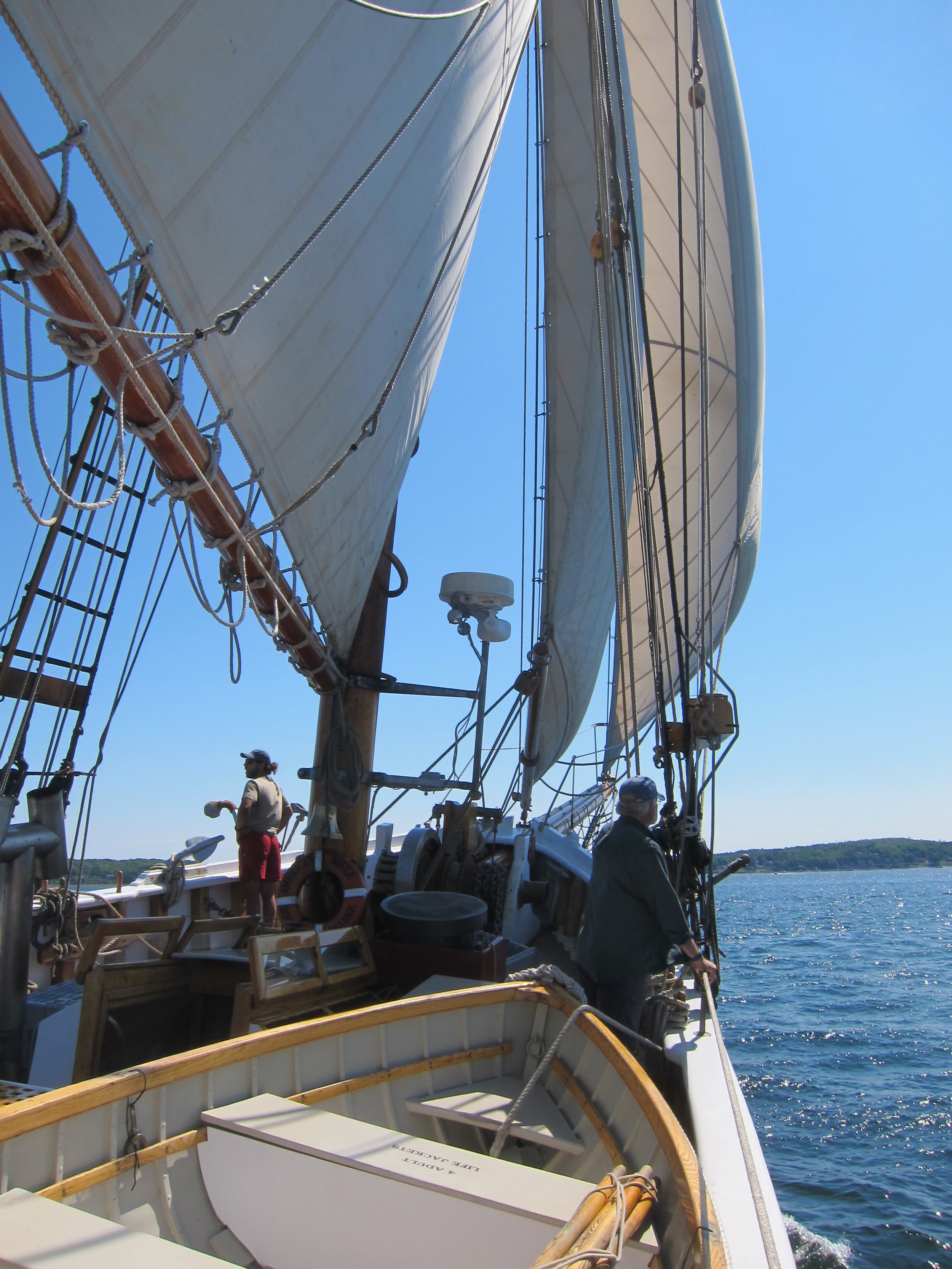
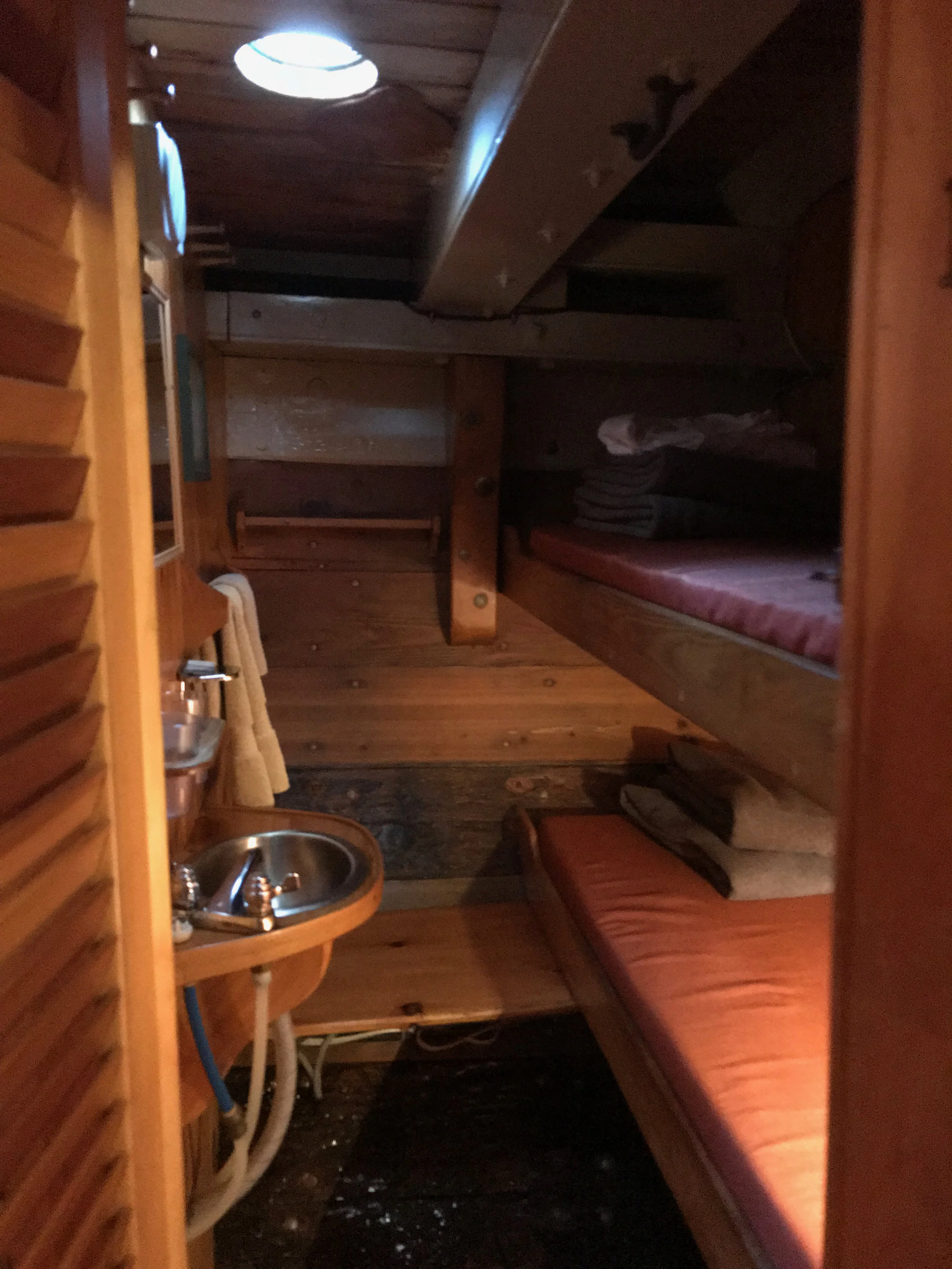
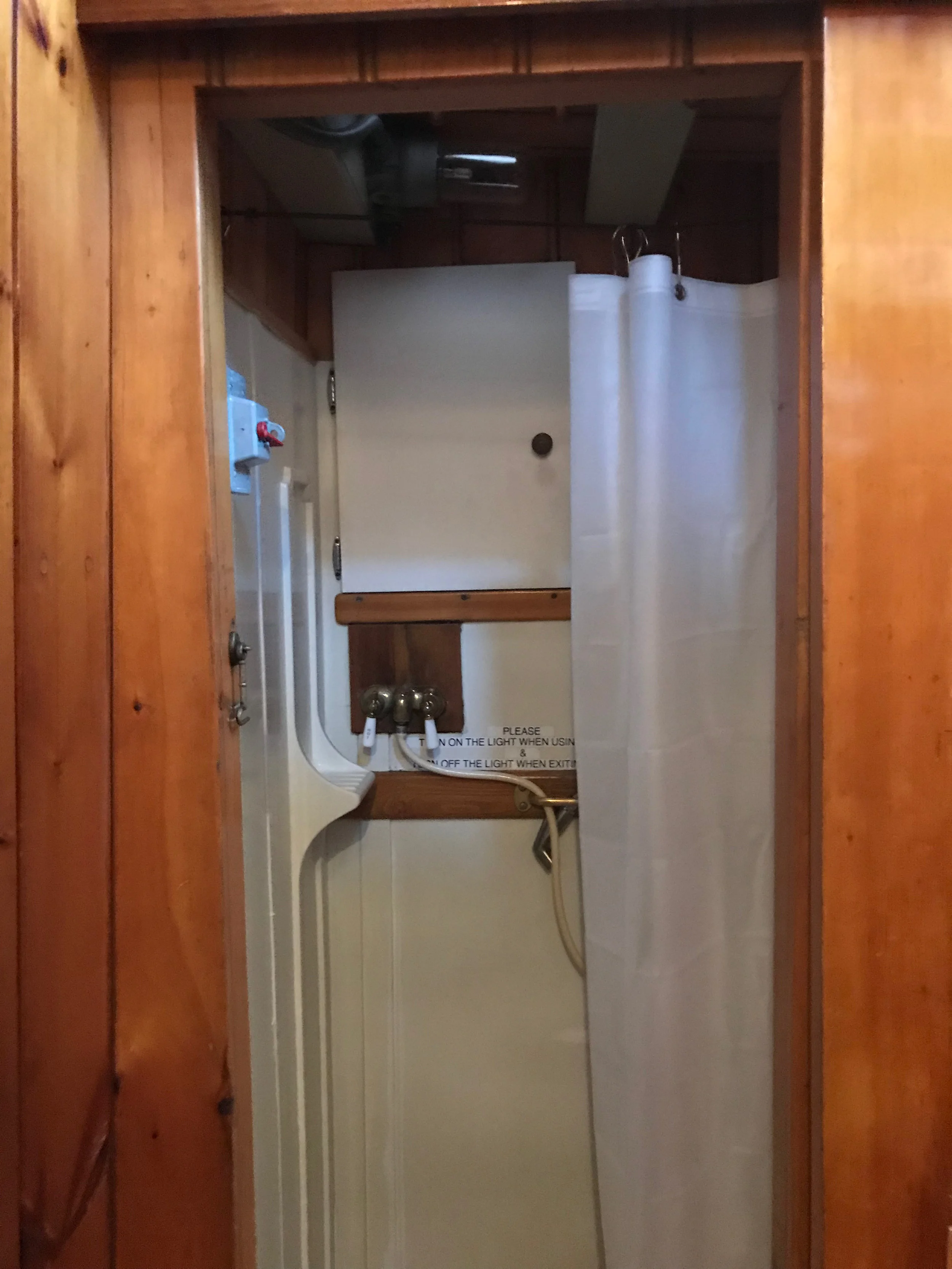
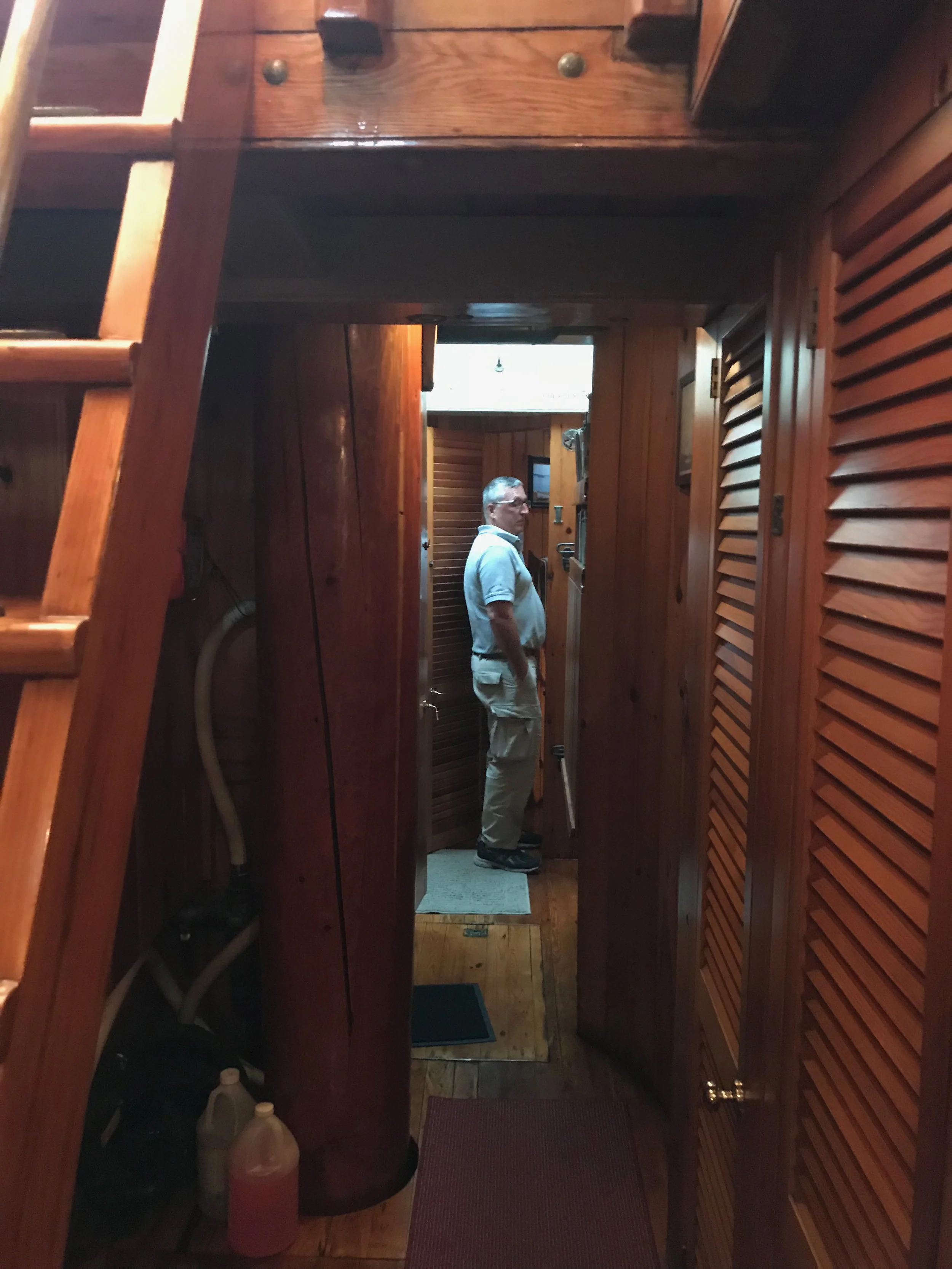
The Windjammers sail from May to October on trips ranging from 4 days to two weeks. The number of passengers varies by ship, but the American Eagle can take 24 passengers, with single or double bunk cabins. There are two ‘heads’, the name for a bathroom on a ship, and one shower, although many wind up jumping off the rail to soak down and clean up. Three homecooked meals a day are provided, and guests can bring anything additional they would like such as beer, wine, etc.
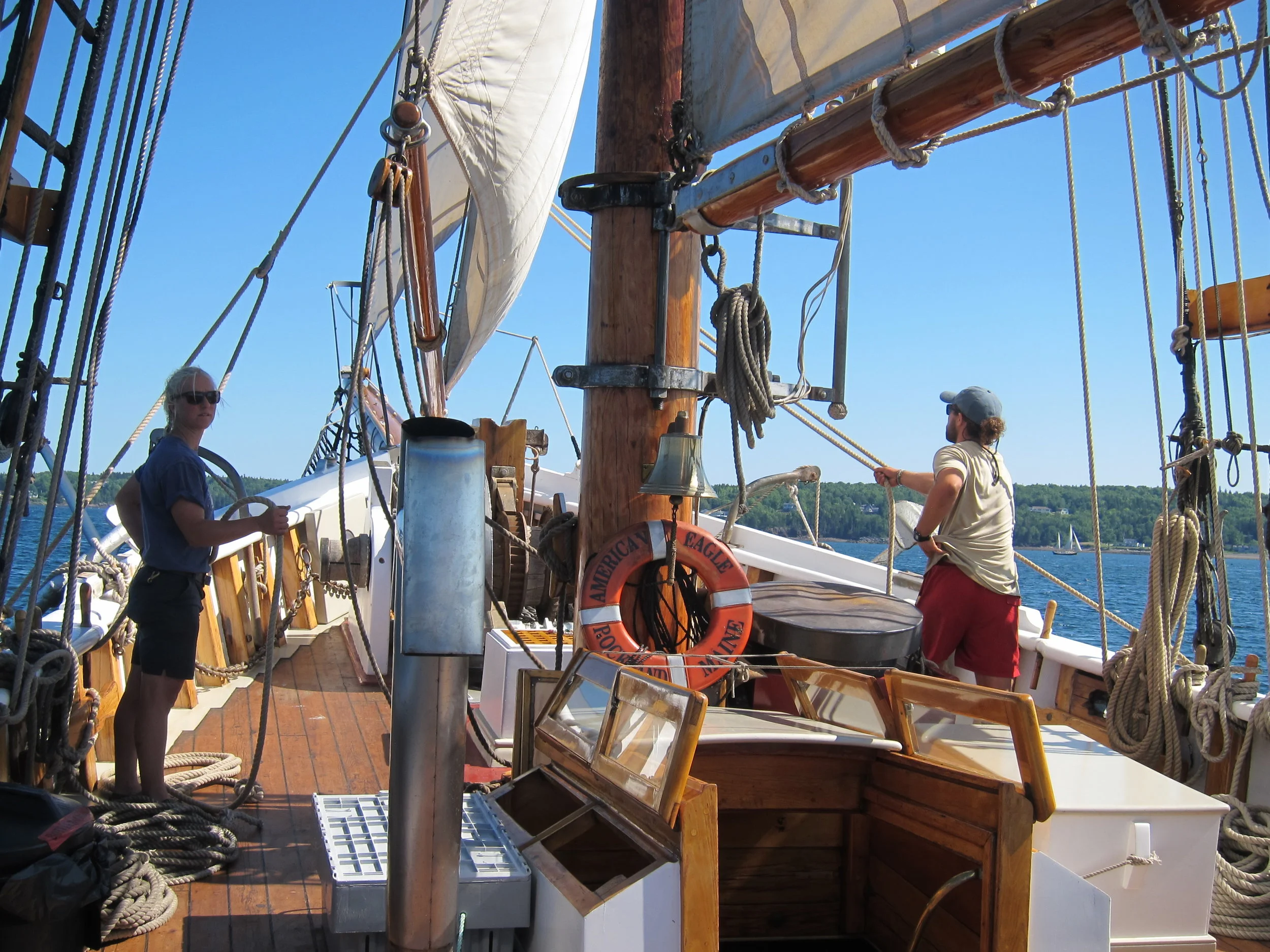
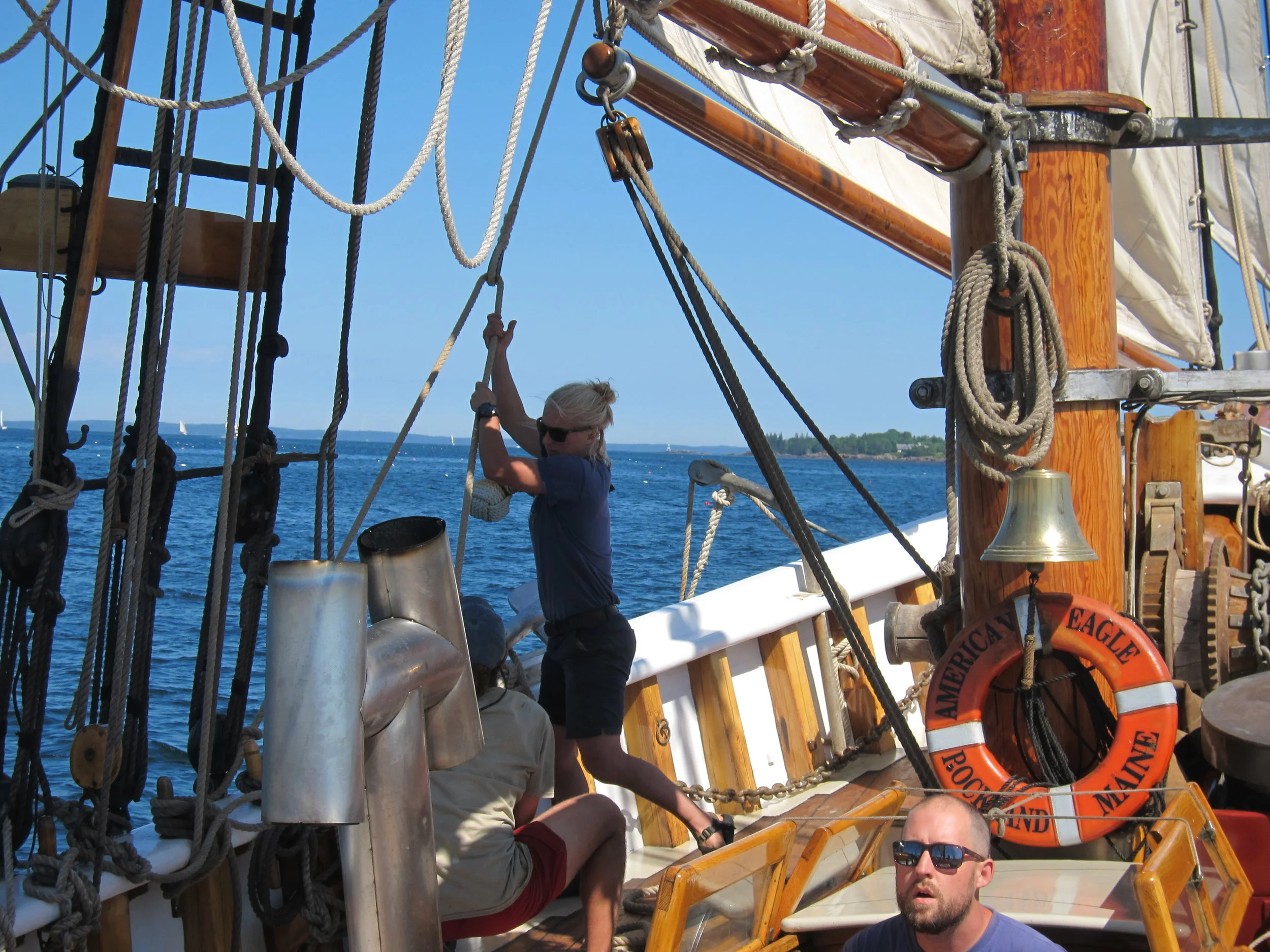
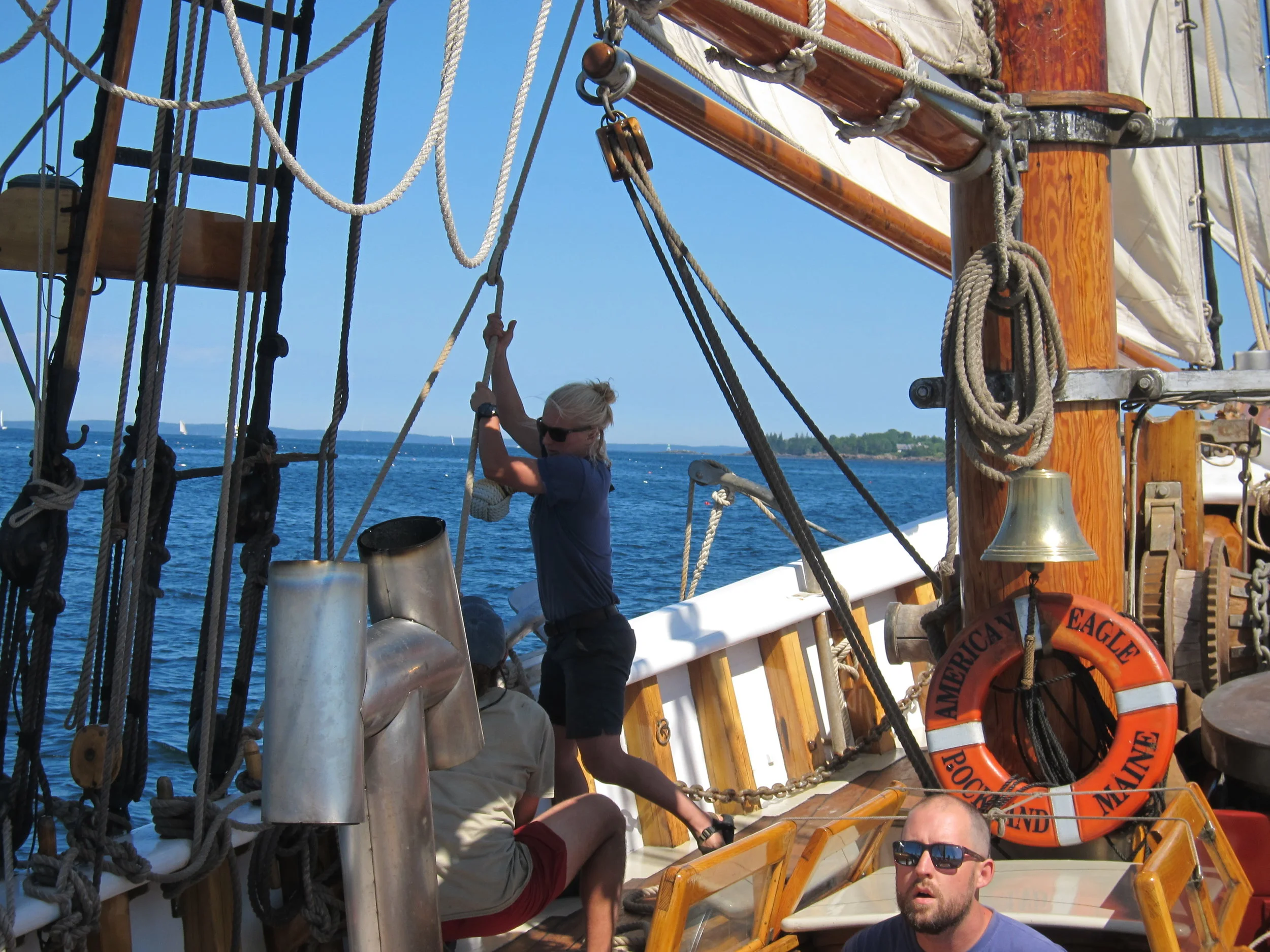
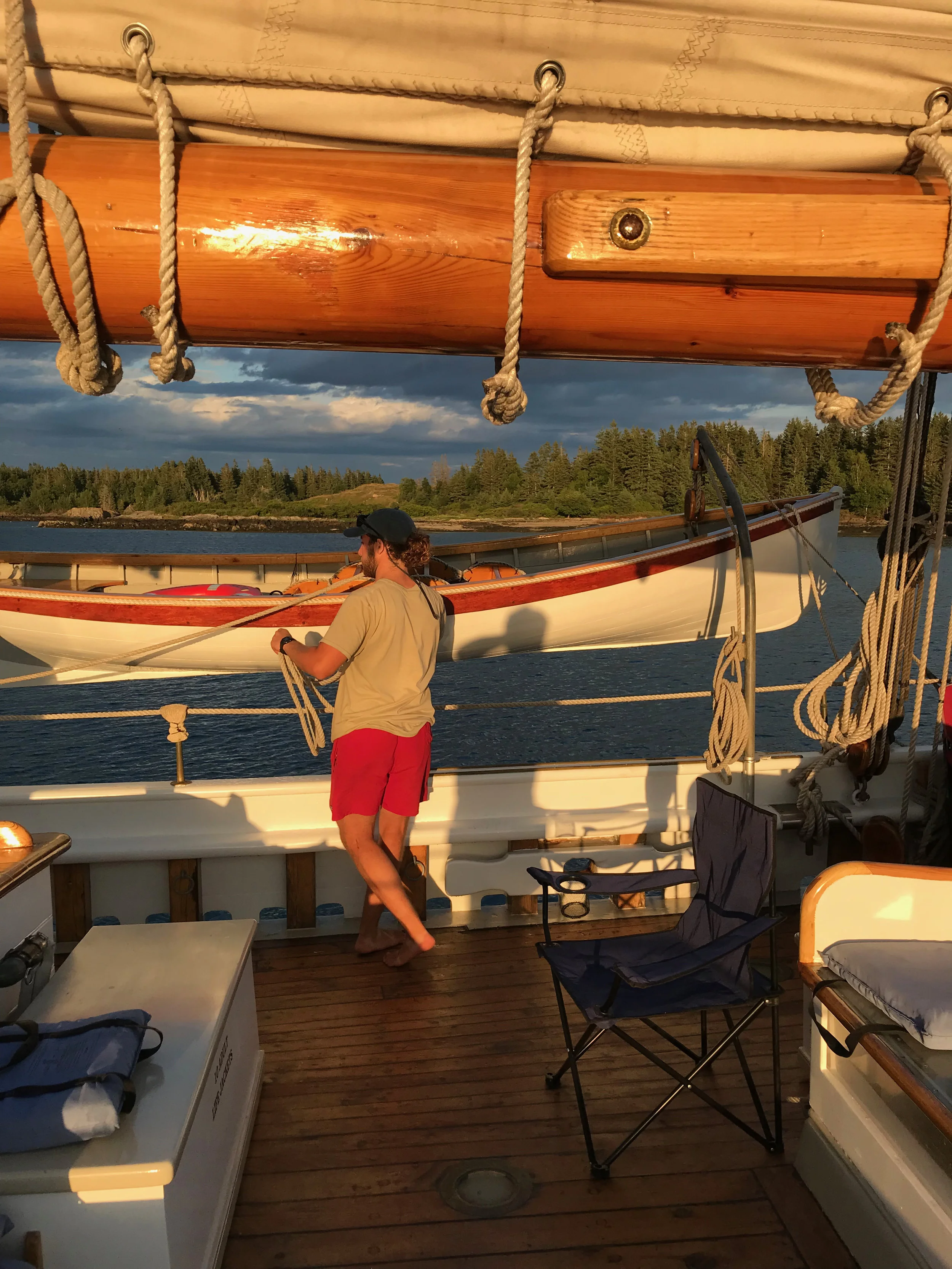
The on deck crew consists of Frist Mate Kristy and her crewmember Andrew, and Matthew and Sarah work in the galley getting meals ready and cleaning up ofter meals and snacks. While they have distinct responsibilities, they all help each other make sure the trip runs smoothly, and have a great time in the process. I was somewhere between passenger and crew, and tried to do all I could to help. I was willing to do anything because I wanted to learn as much as possible, while making things easier on the crew. It turned out there was plenty I could do. Captain Foss had let the other crewmember go a few weeks before, and although they could get by with what they had, and extra set of hands proved valuable. There is an incredible teamwork that happens on the boat, and this crew (minus the one who was let go) had gelled well. It was fun to be included in the team, and I learned quite a bit from them all.
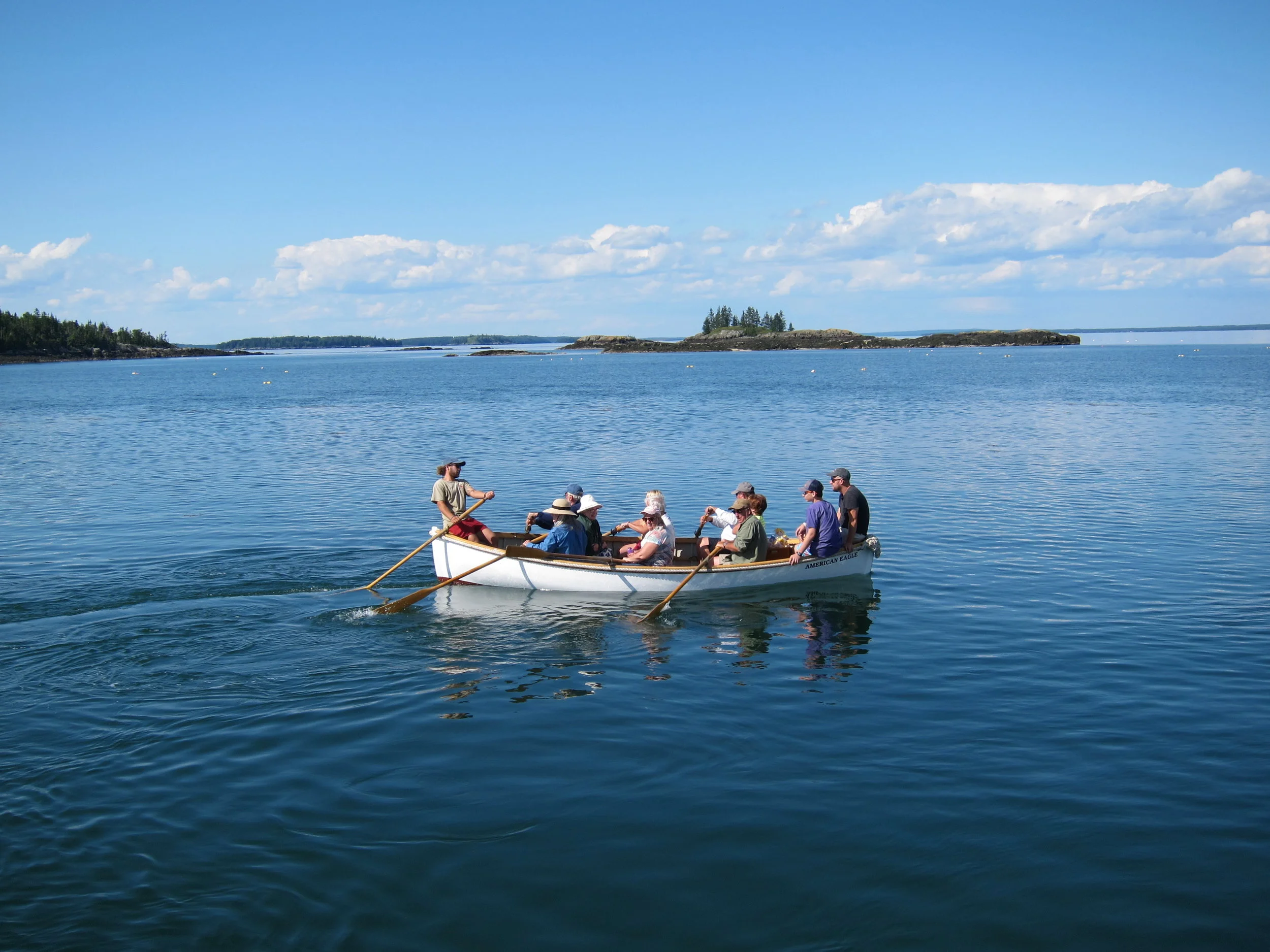
The passengers were great. It is always the wild-card in that business, and the only factor you can’t control. I think I would generally like anyone who chooses to spend their vacation time on a schooner in Penobscot Bay, but I suppose you never know. On this trip we had a family of five from Quebec (only some spoke English), a couple from Florida who seemed more out of place than the others, a father and son duo from Connecticut, and a family of four from Texas. It was so interesting to speak with each of them, and find out their background, what they do, and how they ended up on a windjammer in Maine. I really appreciated all the stories.
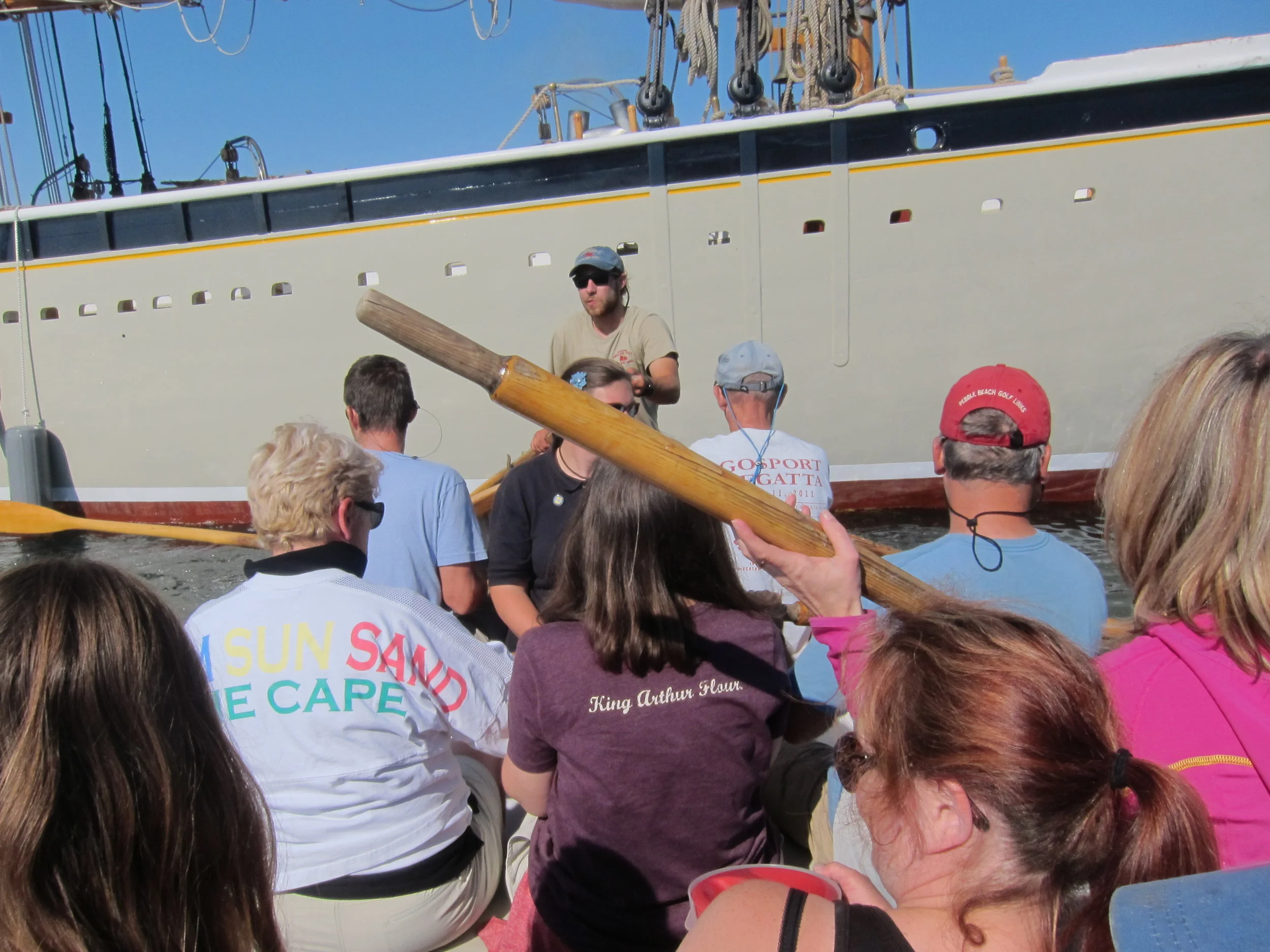
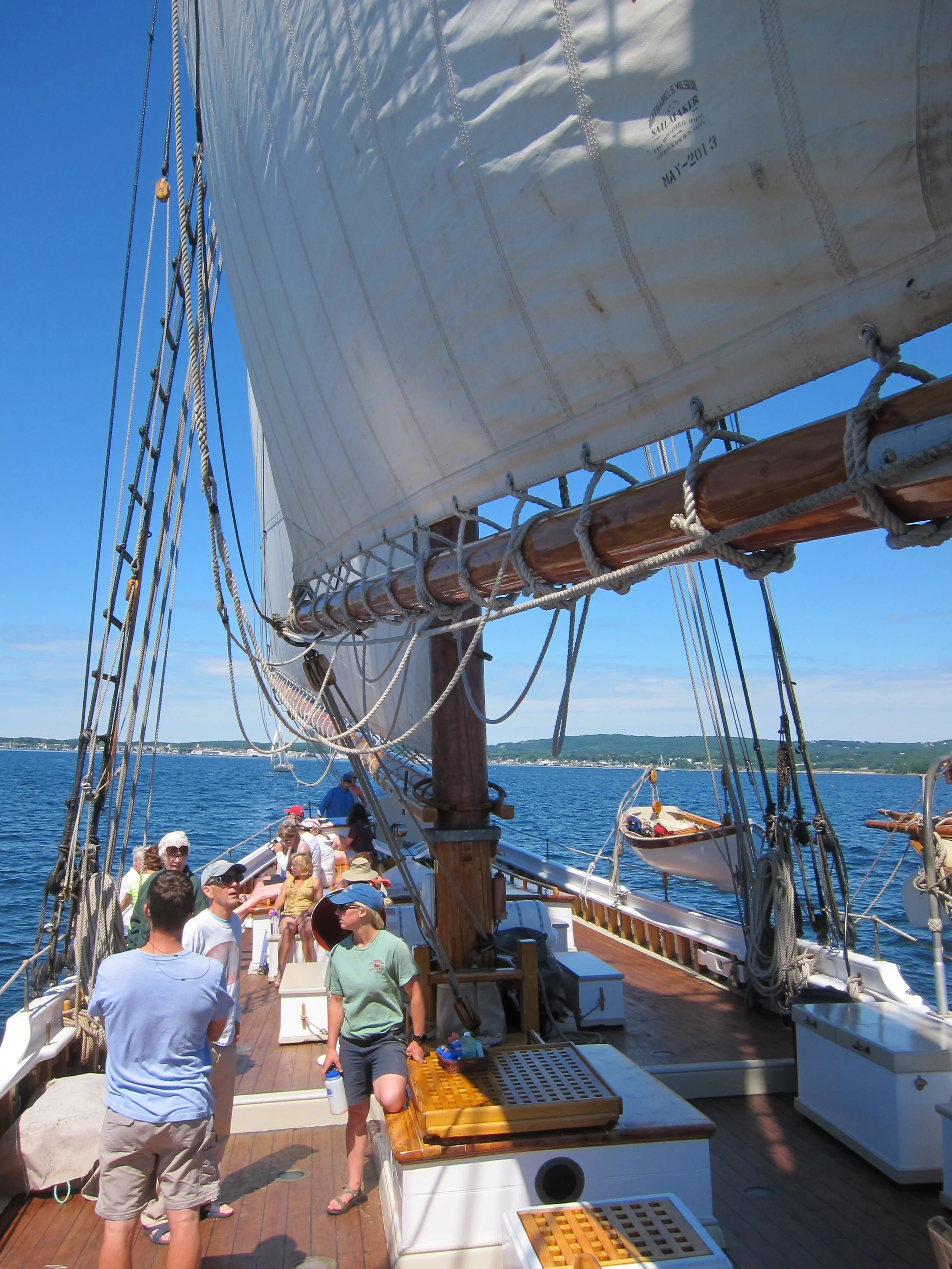
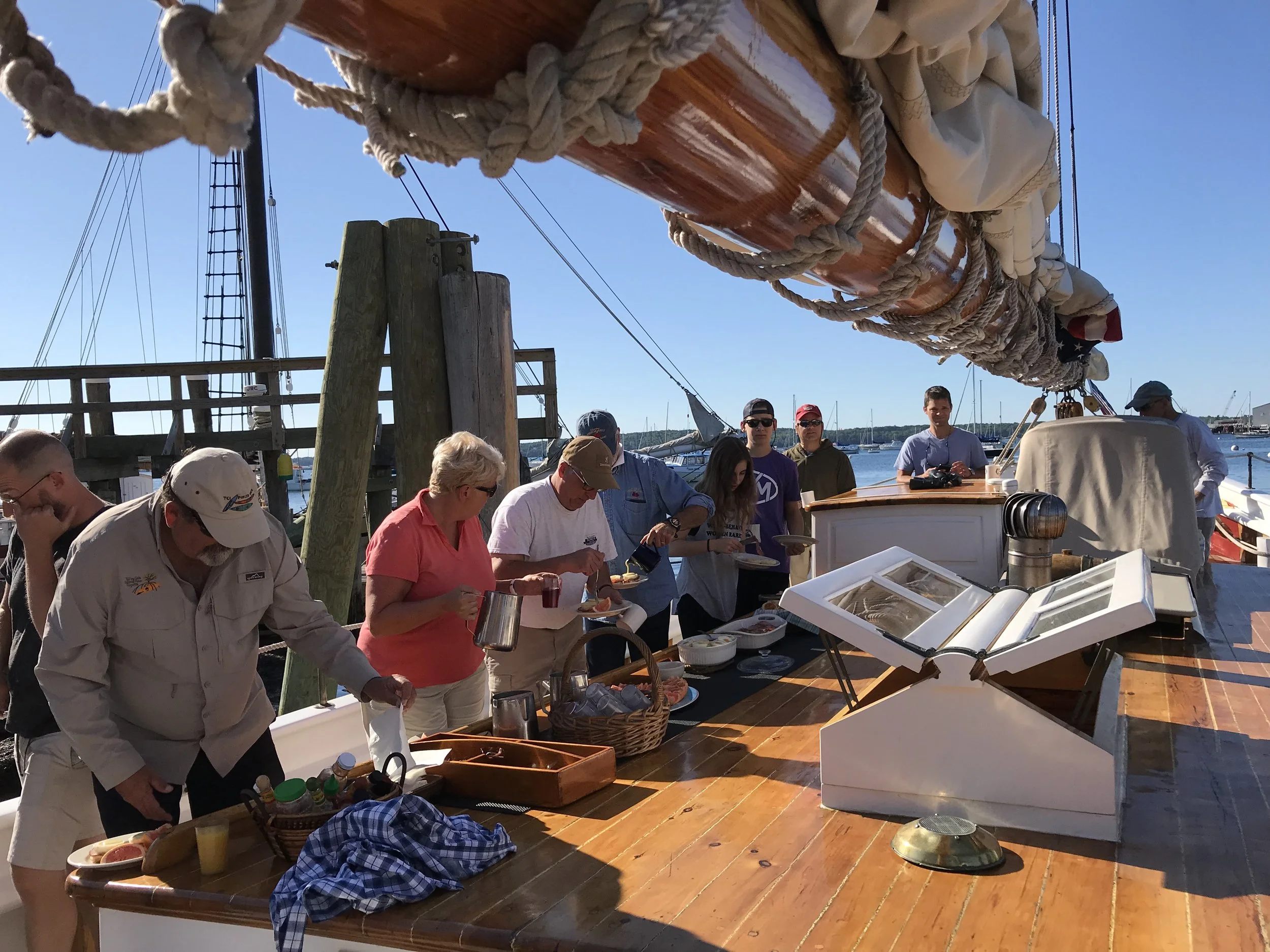
The first night, you show up and get a tour from one of the crew. They show you the boat, your cabin, the galley where you eat, and the heads and shower. Once you get settled in, you are free to roam Rockland,, get dinner, and any last minute items you might want from the grocery store. It was fun to spend a bit more time in Rockland. I was recommended two great spots, Café Miranda and Ada’s. Both were lively spots with impressive menus. I look forward to going back on my next trip.
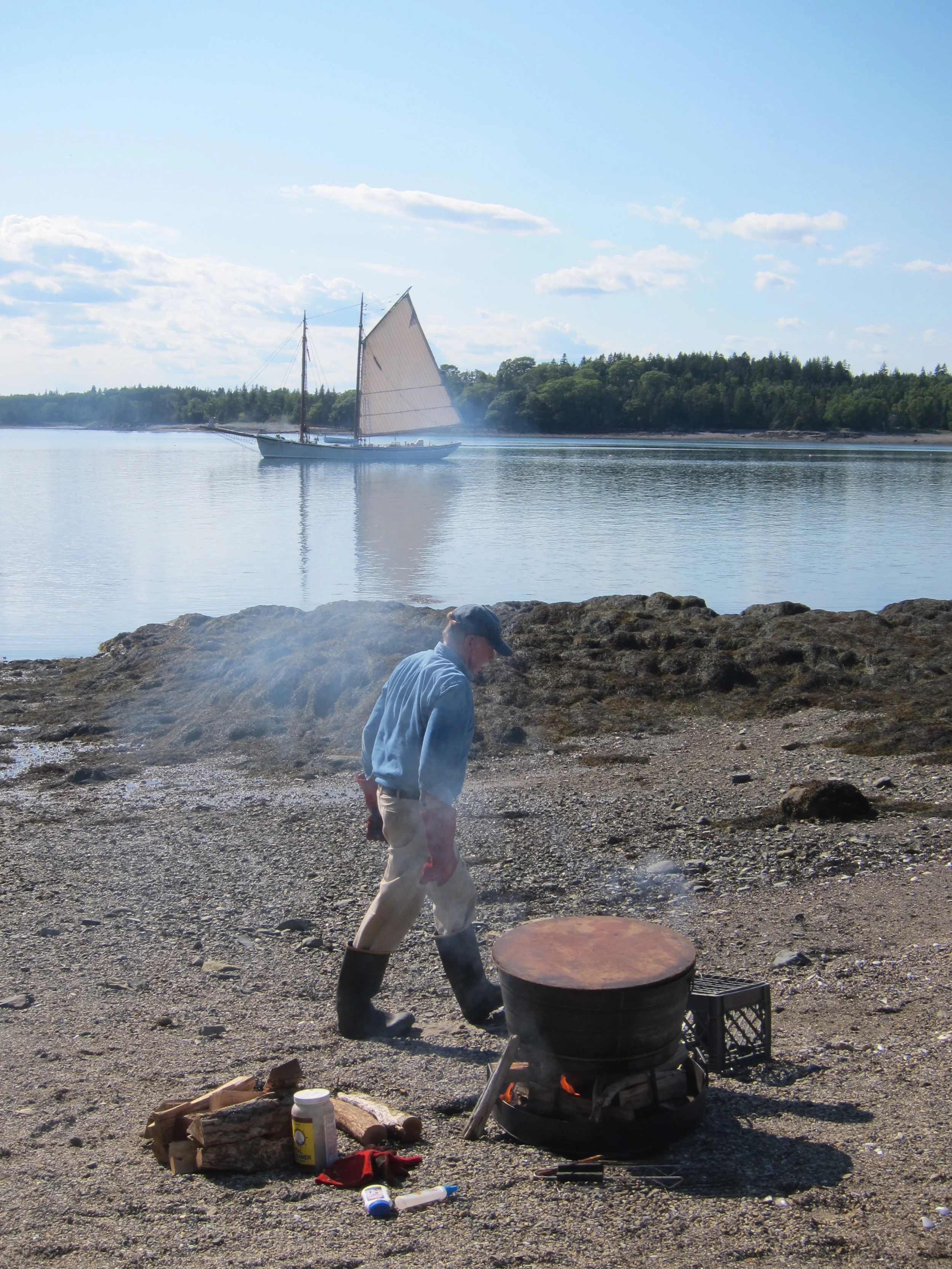
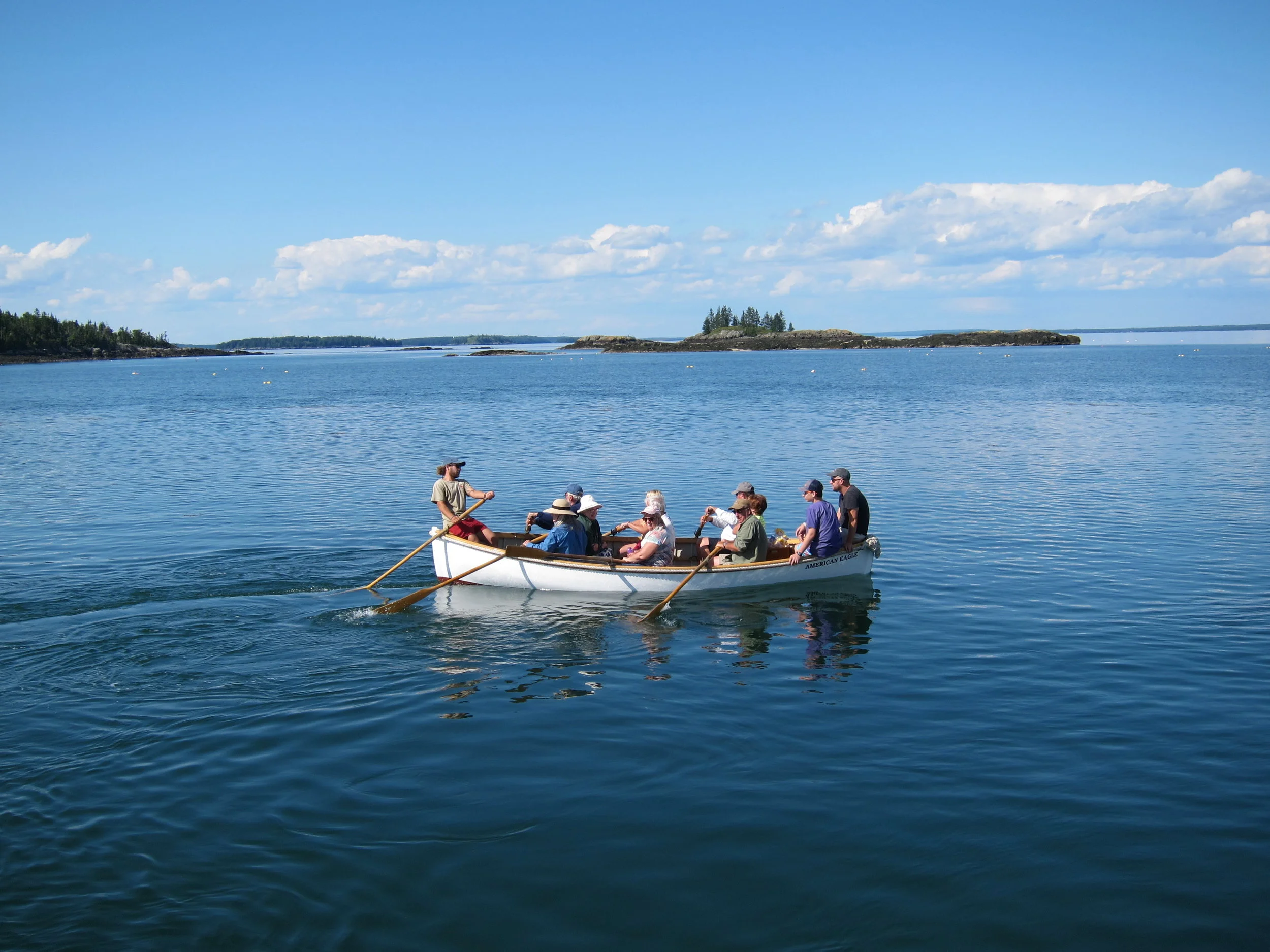
We set off from Rockland on Wednesday and only had a short sail because we had to be back for the Schooner Parade on Friday. Since it was a short trip, we were having the requisite lobster bake on the first night, we sailed around the northern tip of North Haven and stopped at Calderwood Island off the Fox Island Thoroughfare. There is not a great picnic beach on Calderwood, but it is an island where they allow commercial use, and Captain Foss has to stick to those. It is frustrating when you see a perfect beach on the next island over, but access changes dramatically when you are being paid to take passengers there.
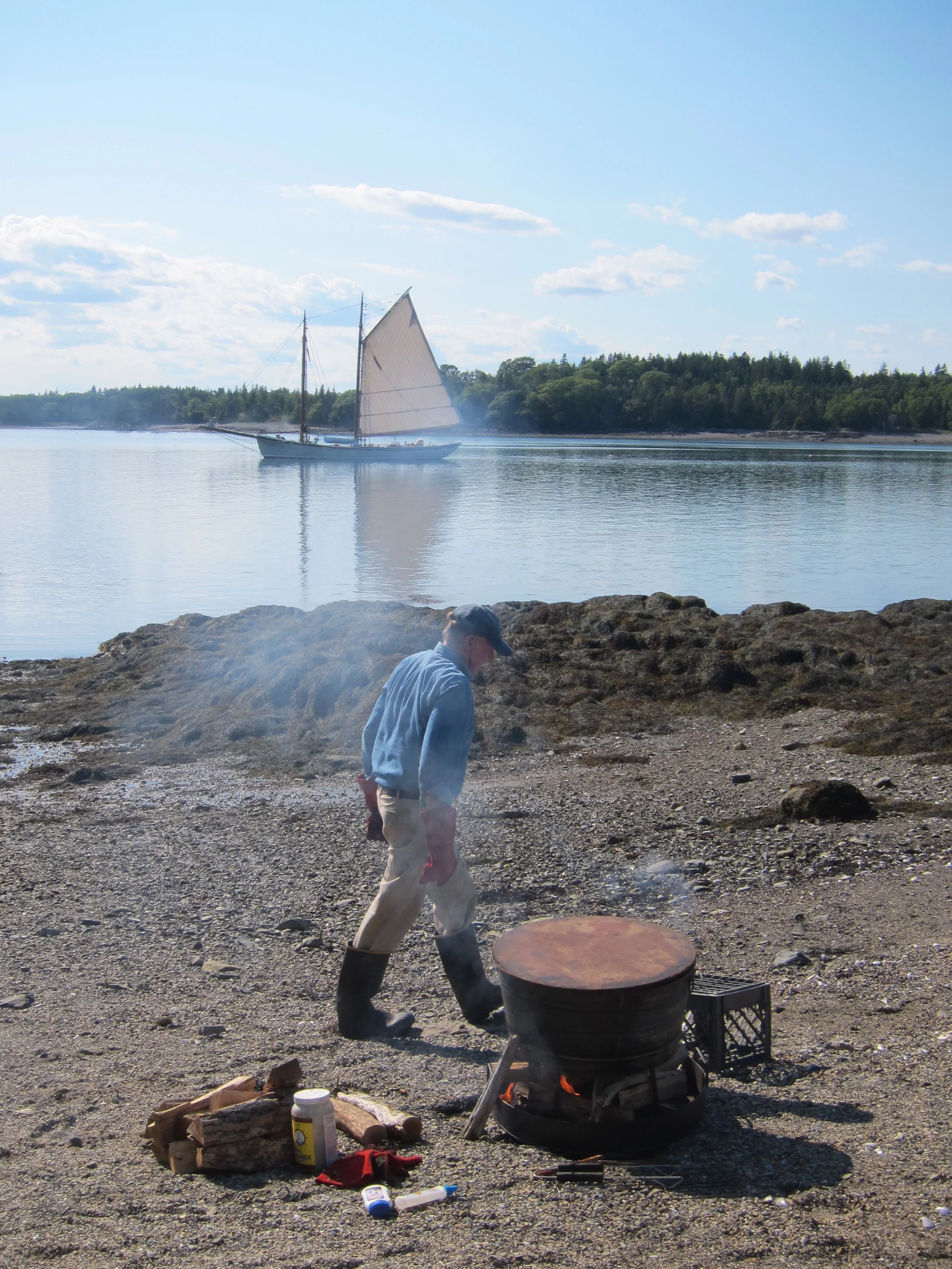
The lobster bake is something that happens on every trip, and it is always a highlight. Obviously, the food is popular, but it is more the surroundings and the process of the island bake that makes it so memorable. It was fun to see how they do the lobster bake, and the processes involved. They literally bring all the lobster passengers could possibly eat, and cook it in a boiler right on the beach. They get a campfire going to cook burgers and hotdogs, and have corn on the cob and a mix of salads, cheese, crackers and dips as appetizers and side dishes. The meal is satisfying, and quite an experience for anyone travelling to Maine, or a Penobscot Bay island for the first time.
We sailed through the Fox Island Thorougfare, and stopped in North Haven village to let the tourists off the boat to walk around and shop. It was fun to show the crew around a little bit. North Haven is one of my favorite places, and we walked into Browns Boatyard, Waterman’s, and Calderwood Hall. Calderwood was celebrating both the 5 year anniversary and the opening of the ice cream wagon, but unfortunately we would miss it since it started at 4PM and we had to be in the windjammer parade at 2PM. Made me realize why I need my own boat and plan!
We went to the parade and sailed past the lighthouse in Rockland several times. Although the tirp was billed as a ‘Lighthouse Parade” trip that would include a tour of the lighthouse, passengers voted to skip the tour as to have more time at our next destination. We then set sail for Owls Head where we spent the night. The whole deck crew and many of the guests went swimming, most off the bowsprit. It was cold and exhilarating. We all appreciate Matthew’s hot homecooked meal that evening.
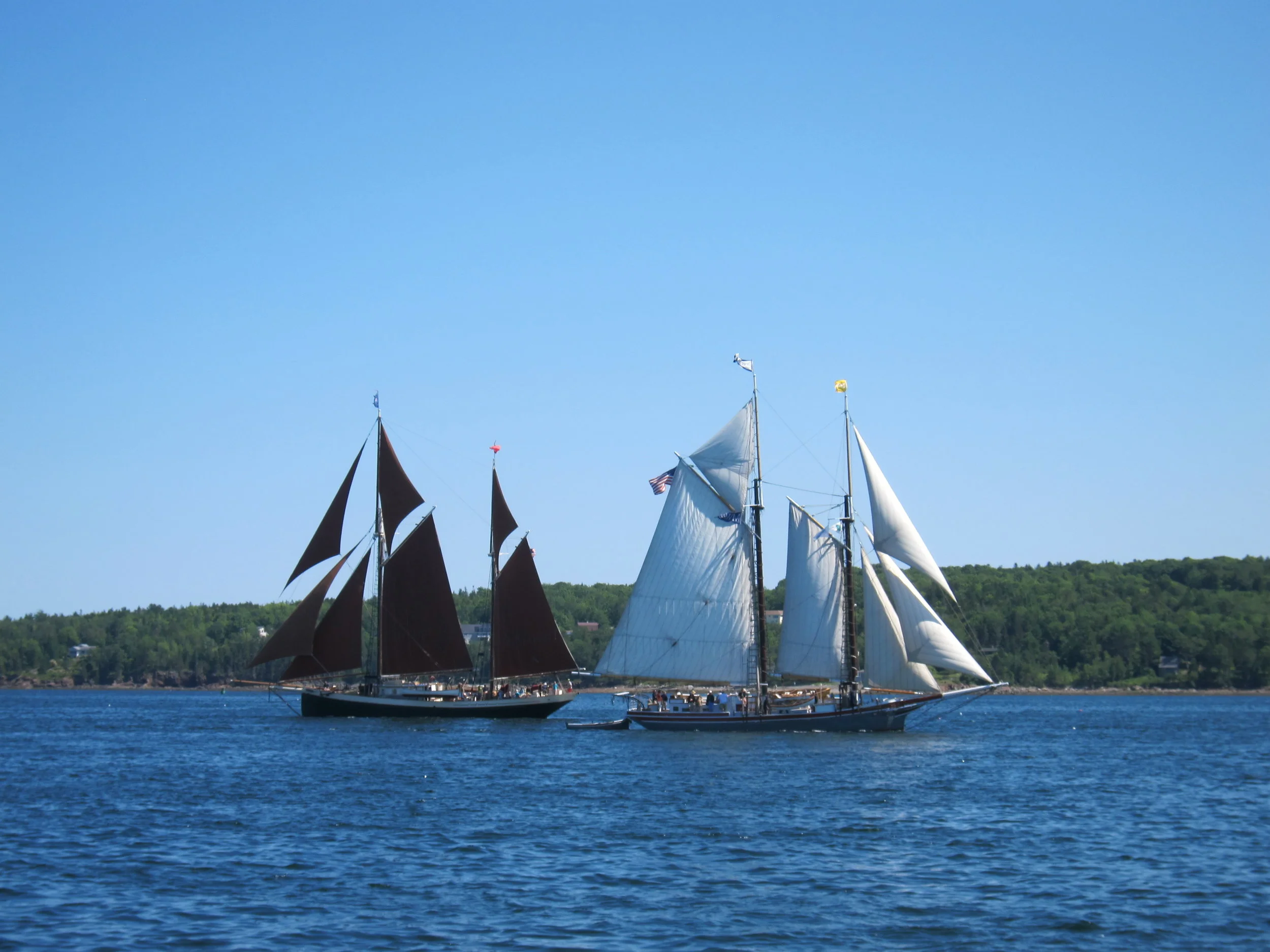
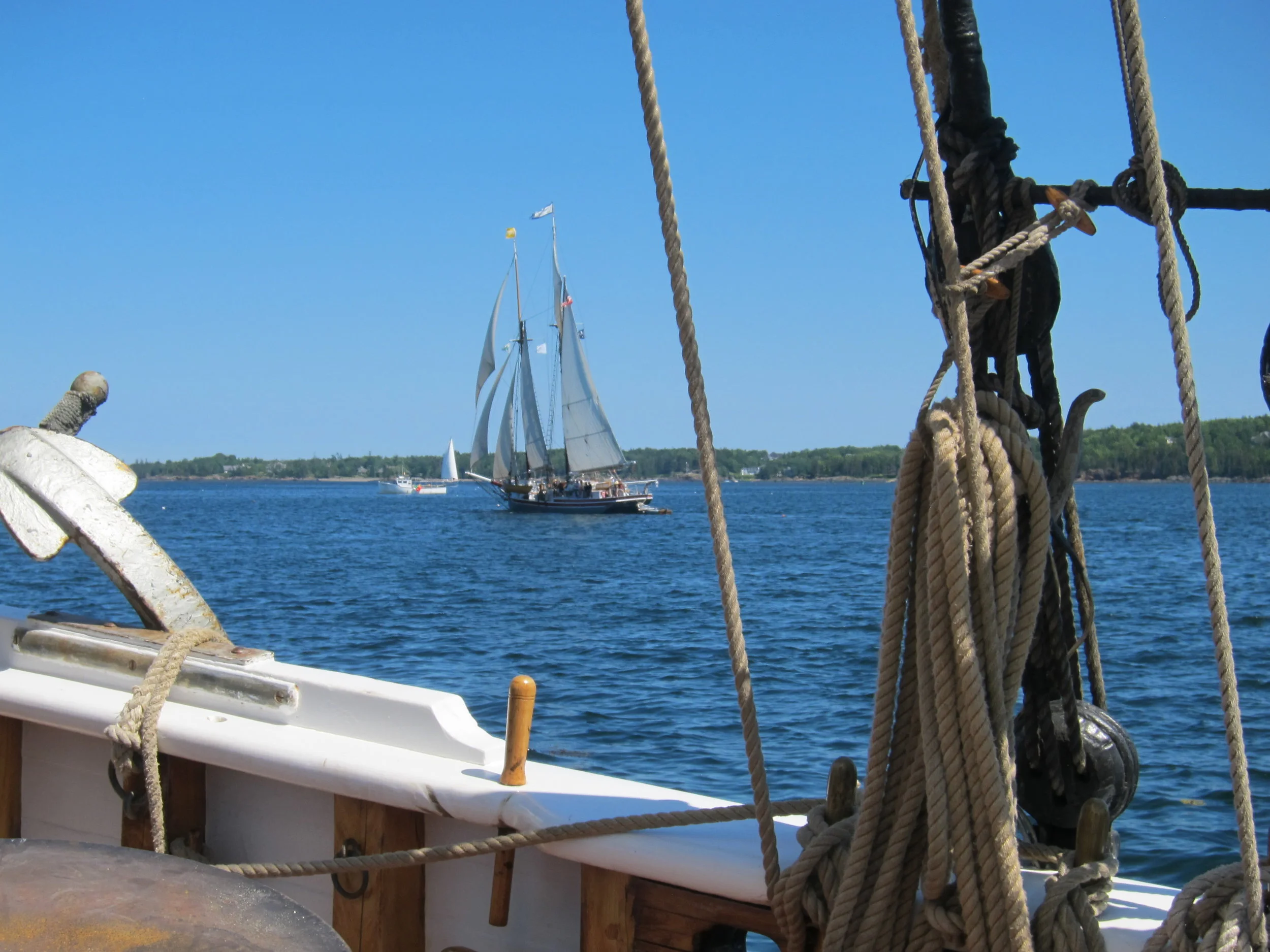
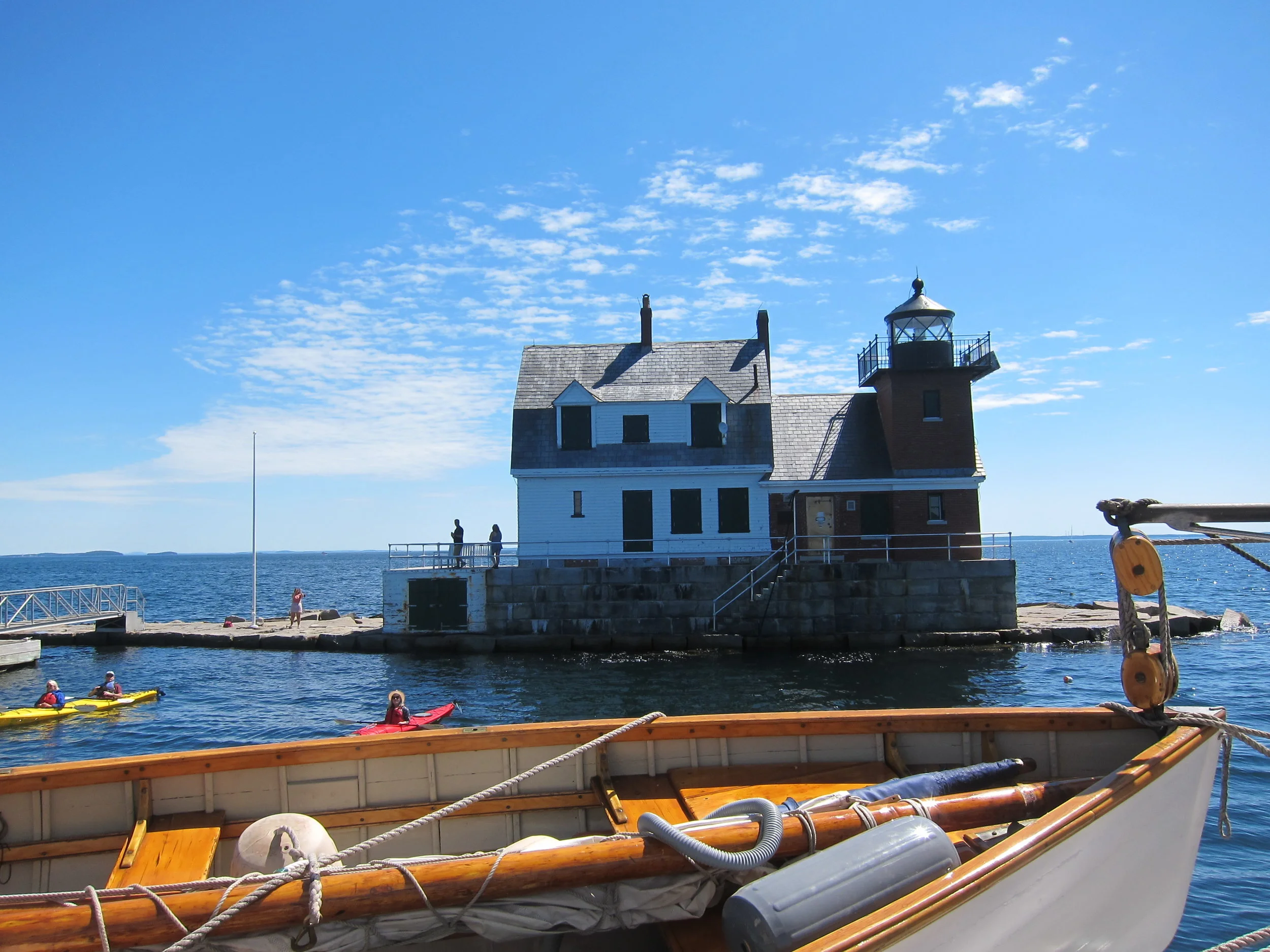
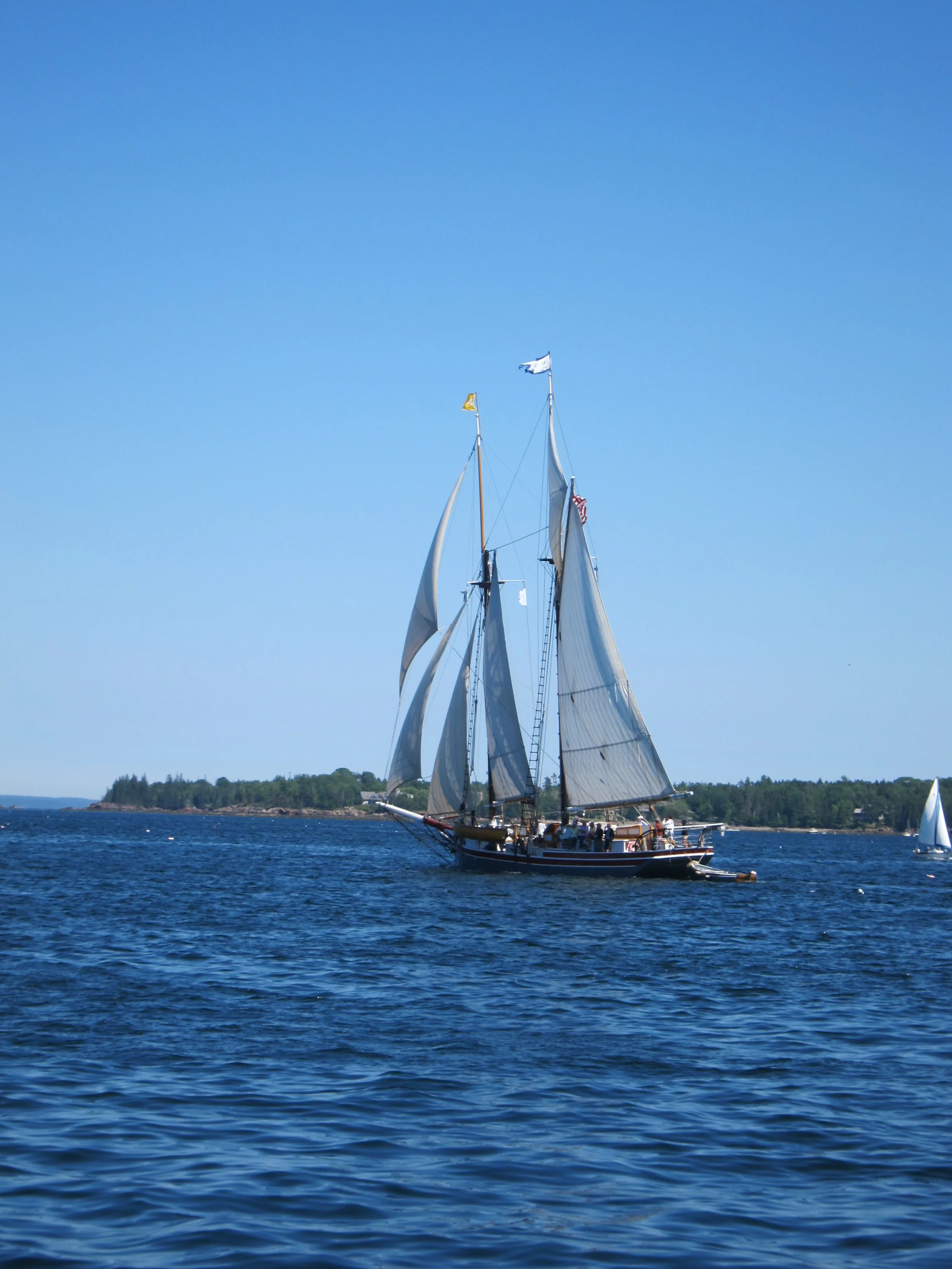
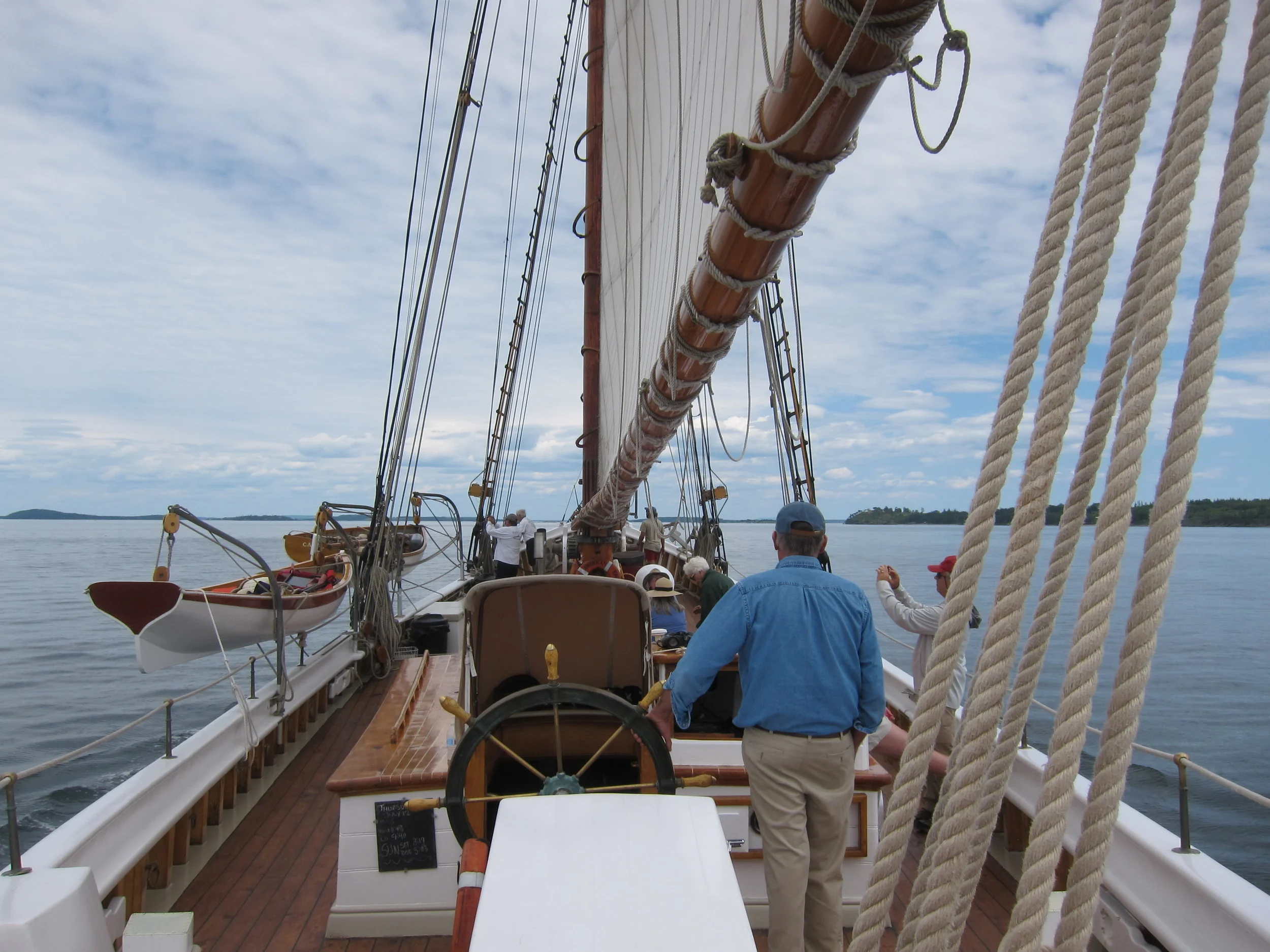
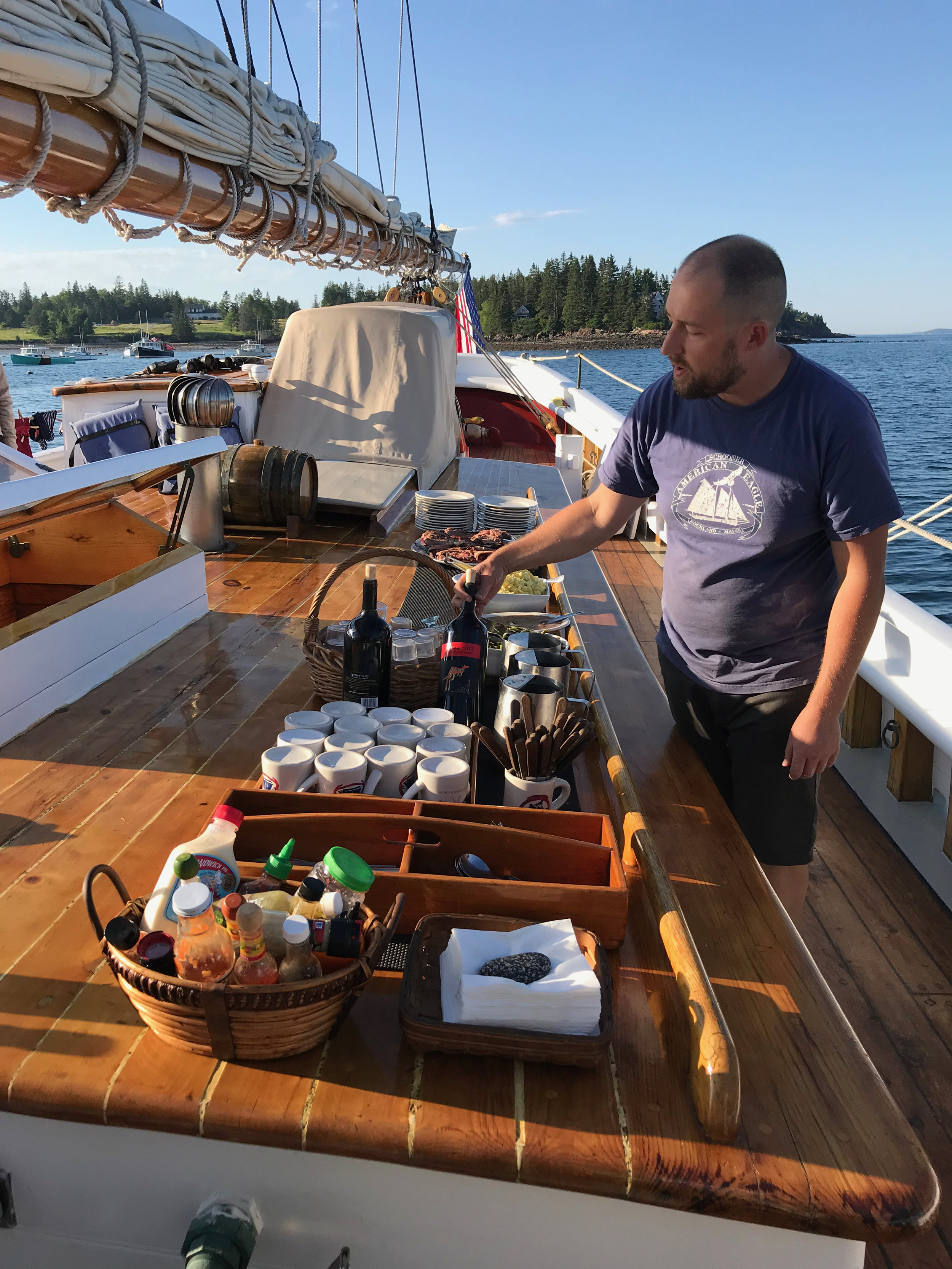
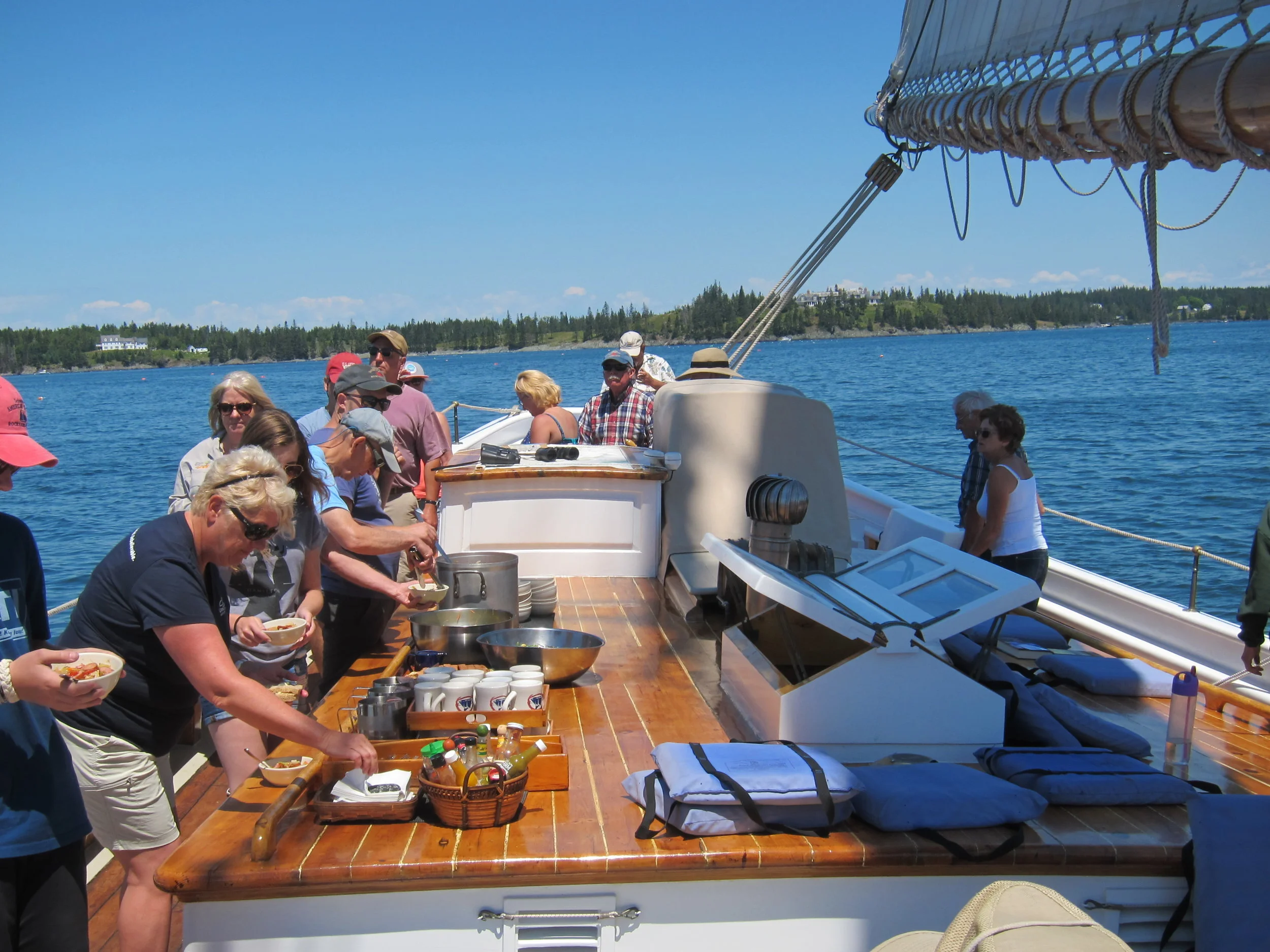
The daily routine is very passenger friendly. Passengers and crew are up early, and there are chairs to relax on deck. All are generally quiet until breakfast is served around 8AM. There are baked goods and coffee and tea, then there is a more official breakfast a bit later with eggs and meat. Depending on the sailing schedule, and the location where the boat is anchored, passengers can go ashore or the sails are raised to get to the destination. Every day there is a chance to get off the boat, and the amount of sailing really depends on the weather and desires of the passengers. It can be a very democratic environment. Lunch is generally served while underway. Then dinner is served once the anchor has been set, sails have been furled, and passengers have had a chance to explore that evenings destination.
I loved being on the boat for the history, but it was also fun to get the experience of a passenger, sleeping in a cabin and taking the trips ashore. I can’t recommend this experience more highly, for those new to Maine and those that have spent their entire lives here.
But I’m excited thinking about the knowledge he has of windjammers, the Bay, and cruising the coast. And his history and friendship with my grandfather. And my family history with these boats. There is so much to learn and absorb it will be a great lesson is listening and mindfulness. And a good test of how I feel about doing this long-term. It was great to meet the fellow passengers. All were friendly and
The toursts
The crew
The daily routine
The history